
After the Kathirmudi Trek, I went to sleep feeling like a king, but I woke up like a wounded soldier in a hospital bed, my whole body sore and aching. I rested the whole day, working on my write-ups, only leaving my bed for my bath and meals. My roommates couldn’t help but laugh when I walked around the hostel like a battery-low robot, sounding “ouch,” “ow,” “oh.”
But as the wise say, time and tide wait for none. I knew I had to hit the road again because the clock was ticking. So the next day, September 23rd, 2025, Tuesday, my 13/30th day at Trivandrum, after finishing some work and having my breakfast, around noon, I left my hostel and boarded a Kerala RTC ordinary bus to Palayam. The bus ticket cost me only ₹25.
Palayam Sights
For the umpteenth time, I got down at the bus stop near the Palayam Church and prayed to Mother Mary’s statue for a safe and productive day. Some ceremony was going on inside the church.
Palayam is a place I can visit innumerable times; I can even imagine myself settling down there someday, as long as it never loses its secular and artistic essence. But as far as my ongoing Trivandrum trip schedule was concerned, I knew I had to wrap up my wanderings in Palayam within two or three more days.
As I crossed the road and stood at the bus stop, awaiting a private bus to the museum, I couldn’t help but notice the R Shankar statue in the middle of the road and the street dwellers who had camped next to it. The children in the group looked hangry and were fighting over minor things.
Chandrasekharan Nair Stadium
Behind me, the Chandrasekharan Nair Stadium stood in its majesty. I imagined how it would feel to be a sportsperson, beholding the stadium for the first time before an important match or event. I would love to revisit it when it’s filled with an ecstatic crowd.
On the other side, I could see the Mascot hotel and a wall with the Bible Quote,
“How beautiful are the feet of those who bring good news!” – Isaiah 52:7
I wondered what it meant, but the smell of grilled chicken from a nearby hotel was too distracting. So the first thing I did when I entered the museum premises was to walk straight to the KTDC cafe and eat a veg biriyani and cold coffee.
There was an unfinished biscuit packet in my bag, so I was forced to keep the bag at the baggage counter for a cash deposit of Rs 10, to be refunded on return.
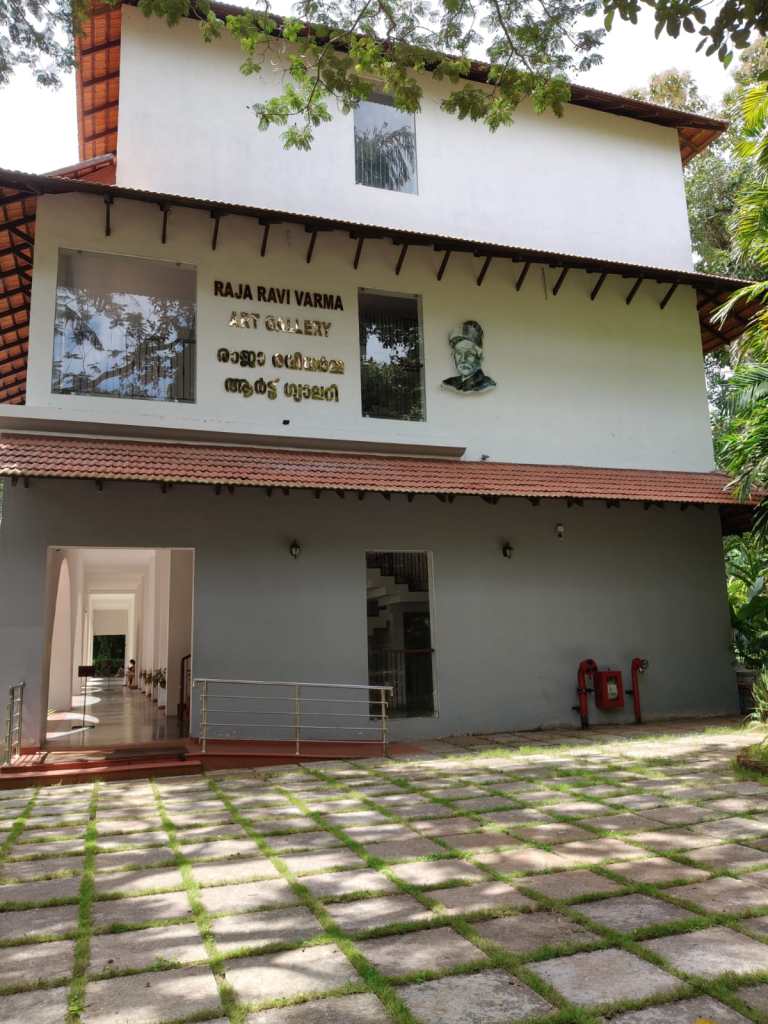
Raja Ravi Varma Art Gallery
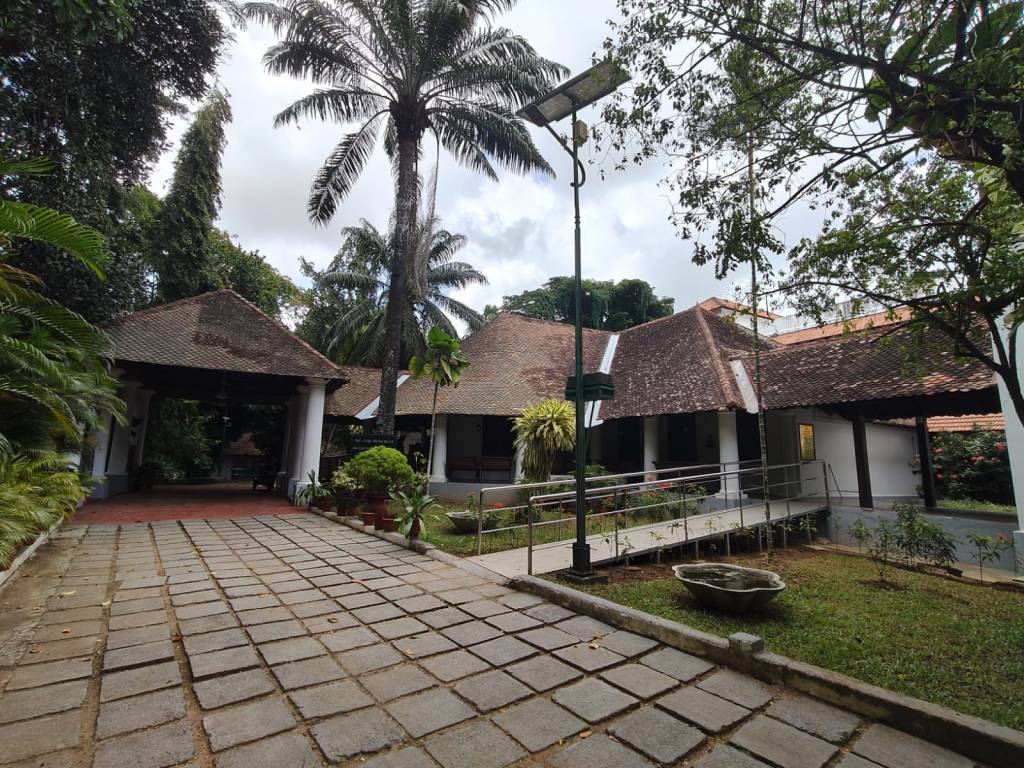
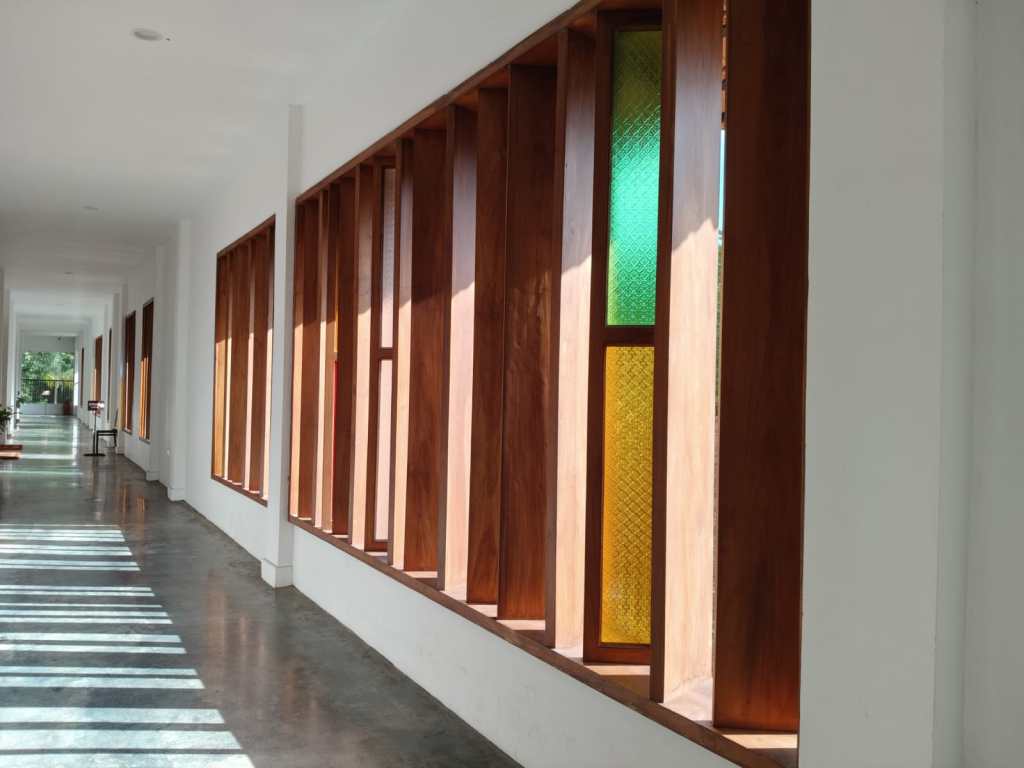
From a distance, the Raja Ravi Varma Art Gallery, with its white walls and brown-tiled roof, reminded me of the traditional “naalukettu” houses of Kerala.
My dad used to buy us kids Balarama and Balarama Digest regularly. I remember reading one about Raja Ravi Varma and his paintings.
Ravi Varma was born on 29 April 1848 at Kilimanoor Palace in Trivandrum as the eldest son of Ezhumavil Neelakanthan Bhattatiripad and Uma Ambabayi Thampurratti. Back then, Kilimanoor was part of the Travancore dynasty, and Ravi Varma’s family was very close to the Travancore royal family.
Ravi Varma’s maternal uncle, Rajaraja Varma, was the chief painter at the Travancore Palace; he was a traditional-style painter. Like many toddlers, inspired by his uncle’s drawings, Ravi Varma began sketching on the walls of the Kilimanoor Palace with charcoal, mud, and leaves. Noticing his passion, Rajaraja gave Ravi Varma his first painting lessons.
When Ravi Varma was 14, his uncle took him to the court of Ayilyam Thirunal Maharaja of the Travancore Dynasty. Impressed by his skill, the Maharaja instructed young Ravi Varma to stay in Trivandrum to study painting. When Theodore Jensen, the Dutch painter, visited the Travancore Palace in 1868, Ravi Varma studied Western-style painting and the oil-painting technique from him.
Thus, Raja Ravi Varma’s painting style became a fusion of European academic art with a purely Indian sensibility and iconography.
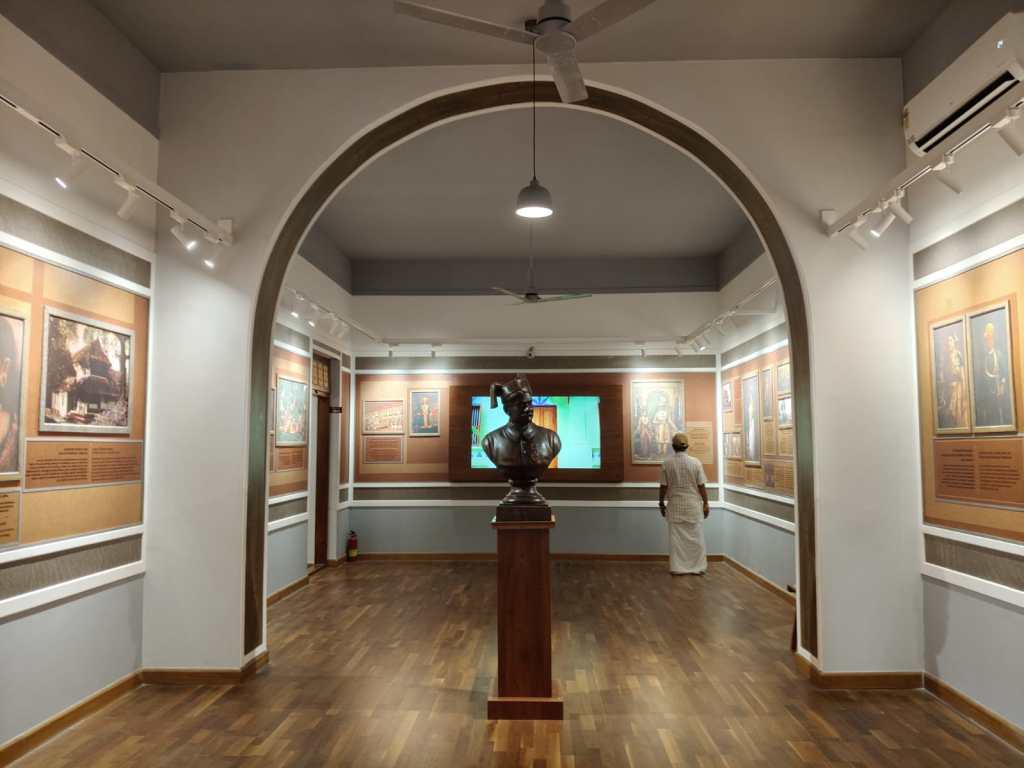
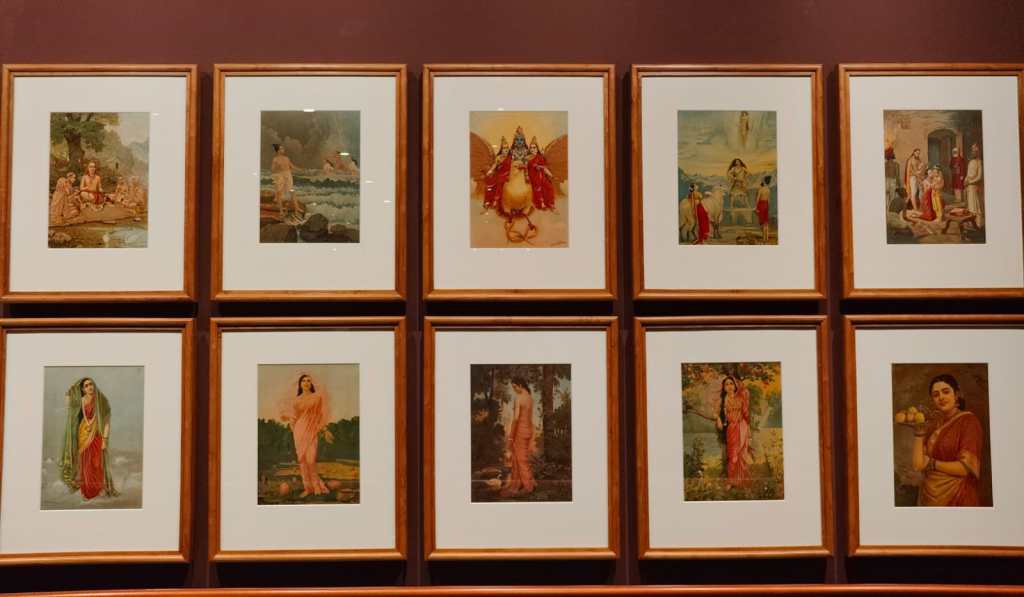
This particular art gallery hosts Ravi Varma’s 46 original oil paintings, 16 pencil paintings, 14 chromolithographs, and his artistic easel. It also exhibits pictorial and digital depictions of Ravi Varma’s life and the awards and accolades he received, and a collection of rare art books.
Since many of Ravi Varma’s original paintings are exhibited in other galleries across India, the gallery offers imitations of these paintings, purely for educational purposes.
Ravi Varma rose to fame when his paintings, such as “Mullappoo choodiya nair sthree” (Nair lady adorning her hair), “Gypsies of South,” and “Sakunthala” won grand prizes in national and international exhibitions. He was also a pioneer in making his art accessible to the general public using affordable lithographs.
One of my favorite things about Ravi Varma is that he was a traveller, too. He travelled all across India in search of subjects and sketched the sights that piqued his interest.
He painted the palaces and royal families of places like Vadodara, Mysore, and Udaipur. After witnessing the traditional elephant-trapping method called khedda in various camps in Mysore, he created a series of paintings named Mysore Khedda.
Towards the end of his life, Raja Ravi Varma returned to Kilimanoor and lived a highly productive, creative life. He passed away on 2 October 1906, aged 56.
His younger son, Rama Varma (born 1879), inherited his father’s artistic talent. Two of his paintings were also exhibited in the art gallery.
Many Indian artists, including renowned filmmaker Dadasaheb Phalke, considered Raja Ravi Varma as an inspiration.
Savoring Art
I’ve heard many people complain that museums and art galleries are boring, that they appeal only to the intellectual minds, particularly those who work in academic or creative fields, actively engaging in critical thinking, research, and heavy-load mental work. In Kerala, we call such intellectuals bujjis or budhi jeevies.
I don’t think museums and art galleries are boring, but enjoying them is not as easy as watching a sunset at a beach. They’re like shy and introverted people, who take their time to reveal their true selves.
They need our love, time, and attention, not another spectator who rushes through them and overlooks them. Because when they finally feel safe with us and choose to unravel their thoughts, vulnerabilities, and secrets, our own lives become richer and fuller, just by having witnessed it.
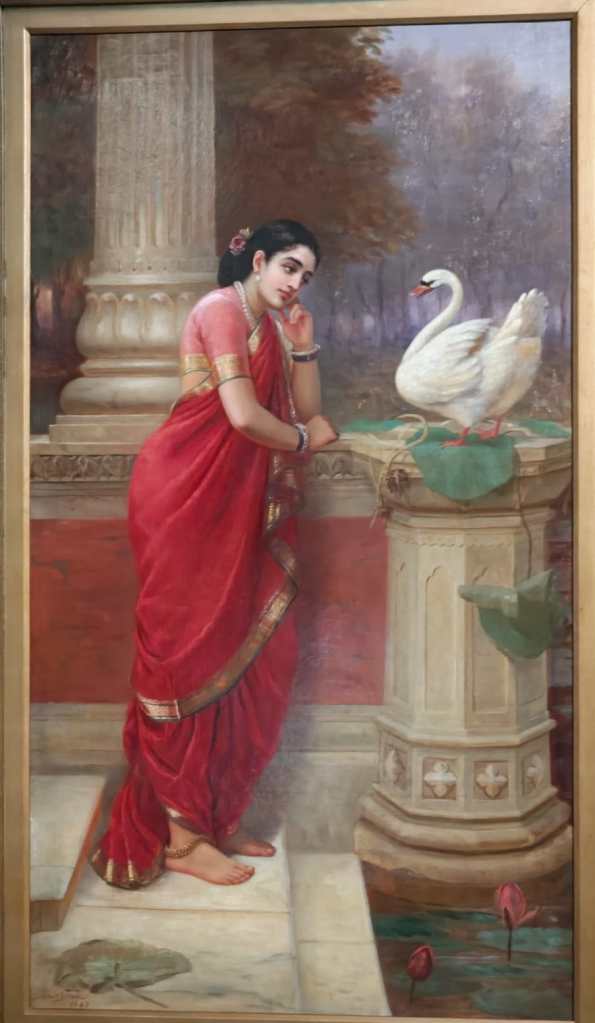
As I sat on a bench in front of a Ravi Varma painting, lit under a cosy yellow glow, examining its beauty in such proximity, I felt like the luckiest woman in the world. As if I were living inside a spellbindingly beautiful and intimate dream.
Looking at someone’s art or write-ups is probably the closest we will ever come to their heart and their soul. It’s an honor and a privilege.
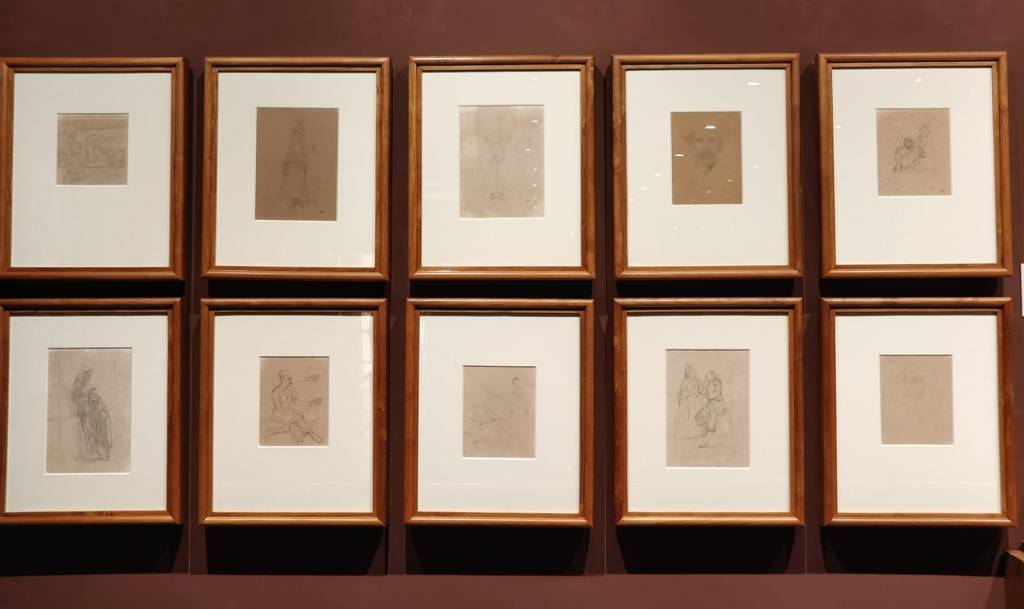
Ravi Varma’s graphite on paper sketches intrigued me as much as his final oil paintings. They showcased his artistic mind at work, even amidst trial and error. I stared at the paintings as long as I could. The lusciousness of their colors, the intricate detailing of even the ornaments worn by the women. What was I hoping to imbibe? At least, a shard of their beauty, soul, and essence, I guess.
The joy in my heart tripled when I saw a differently-abled man walking around the gallery in crutches, and admiring the paintings. That, for me, is the true spirit and beauty of humans and their resilience.
Ravi Varma’s Women
Ravi Varma’s portrayal of Hindu characters has become an integral part of the Indian imagination of the epics, especially his depiction of the stories of Dushyanta and Shakuntala, and Nala and Damayanti, from the Mahabharata. He often modeled Hindu Goddesses on Indian women, whom he considered beautiful.
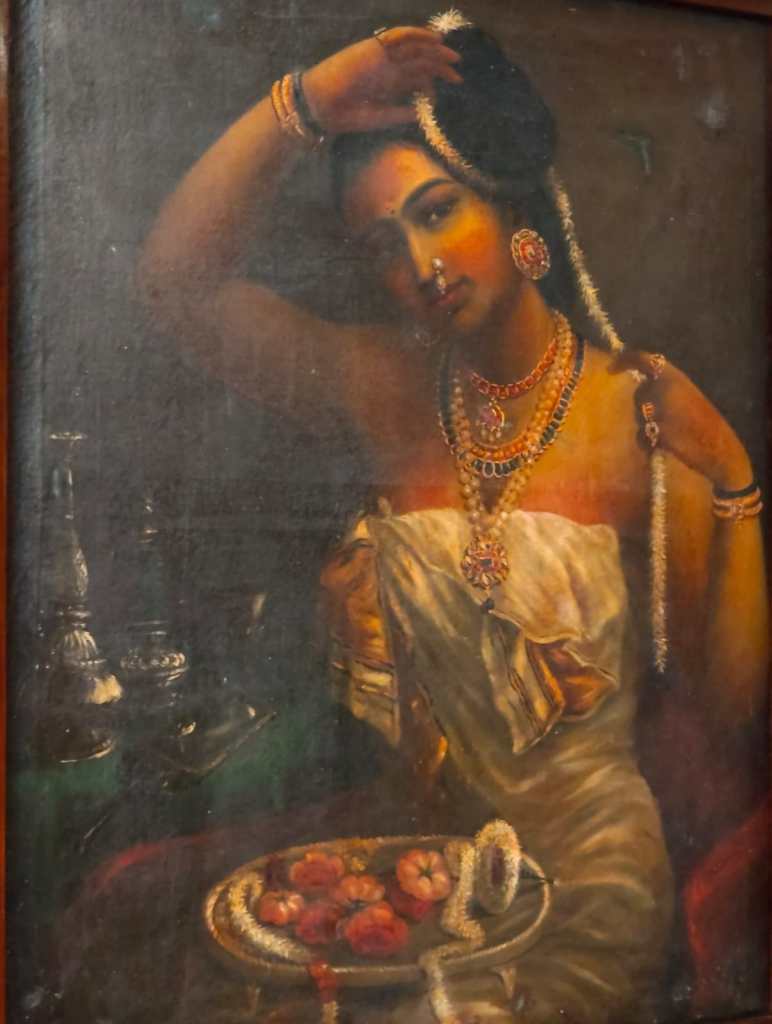
At school, for the fancy dress competitions and tableaus, I’ve seen my friends and seniors dressed up as Ravi Varma paintings, especially ‘Nair Lady Adorning Her Hair, ‘The Milkmaid,’ and ‘Woman Holding a Fruit.’
I remember feeling excited to see the Malayalee actress Kavya Madhavan dressed up as Ravi Varma paintings in the song “Pinnakkamaano” from the 2005 movie “Anandabhadram”. Our social media buzzed when renowned South Indian actresses and danseuses dressed up as Ravi Varma paintings for photographer G Venket Ram’s limited edition 2020 calendar.
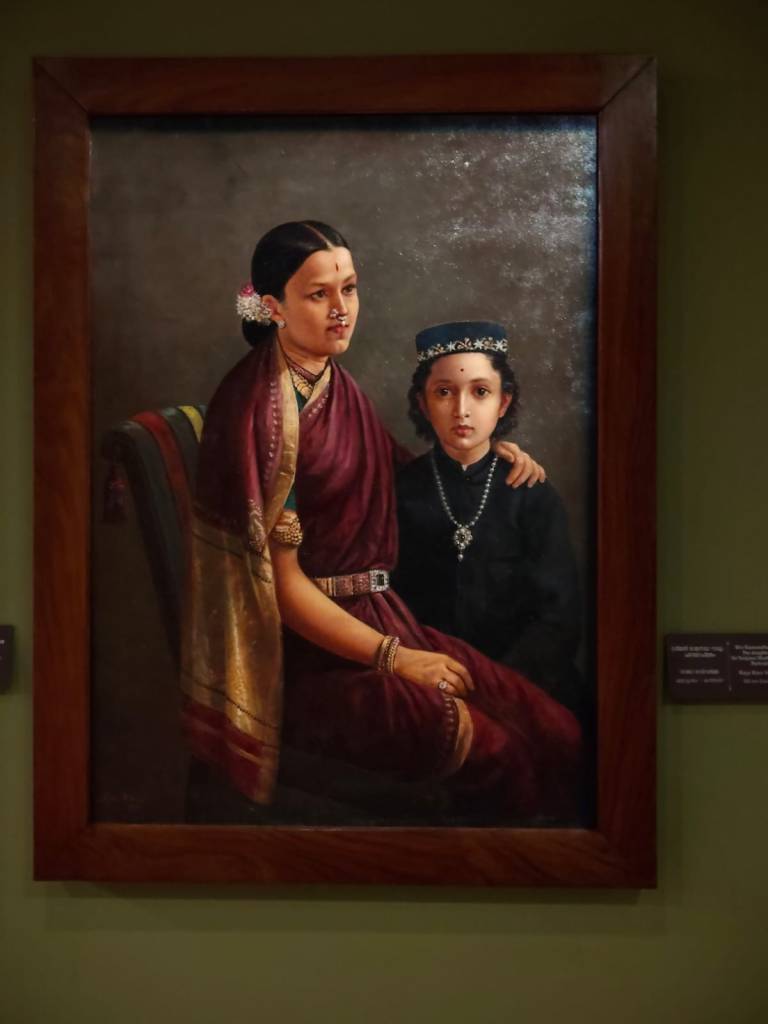
Becoming a Mani Ratnam heroine, or dressing up as a Raja Ravi Varma painting, is almost like winning a beauty pageant in South India.
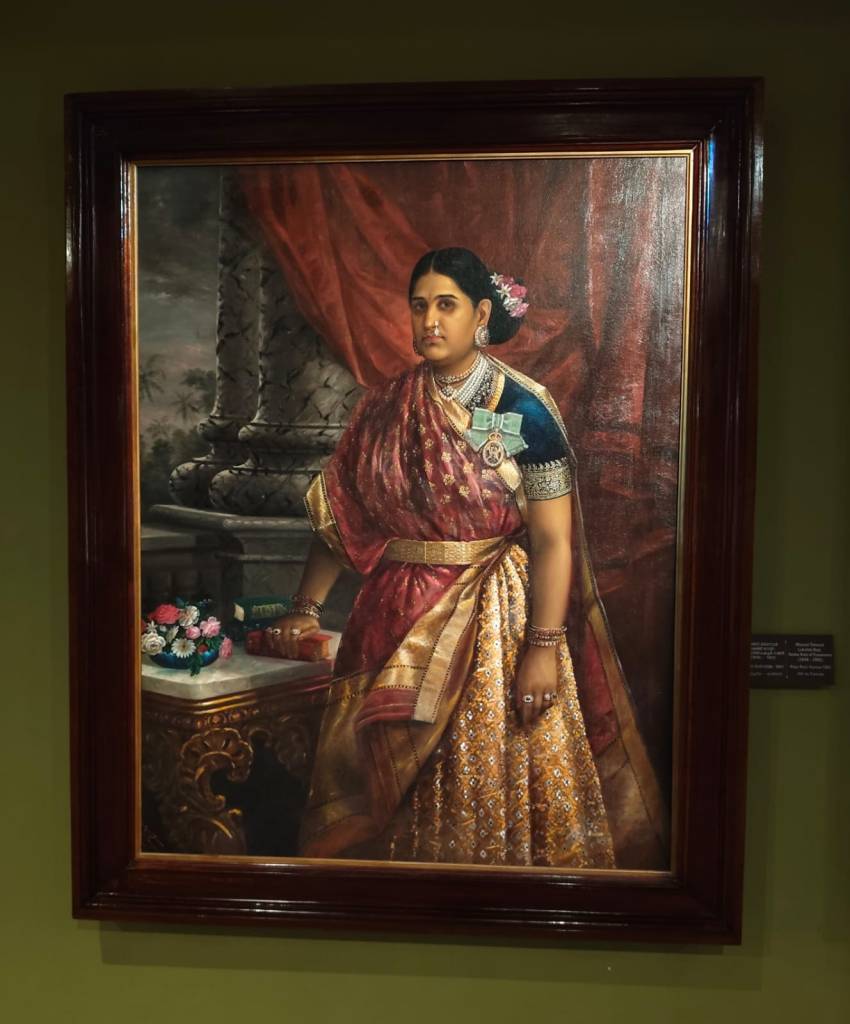
Ravi Varma’s women aren’t just pretty but also spirited. They have hearts, souls, and minds, and not just bodies. They don’t exist for men to ogle at; even a modern-day woman can resonate with them. Yes, he portrays women in majesty, like Goddesses and Royal queens, but he also depicts them in love, yearning, and daydreaming, or in pain, and looking desolate.
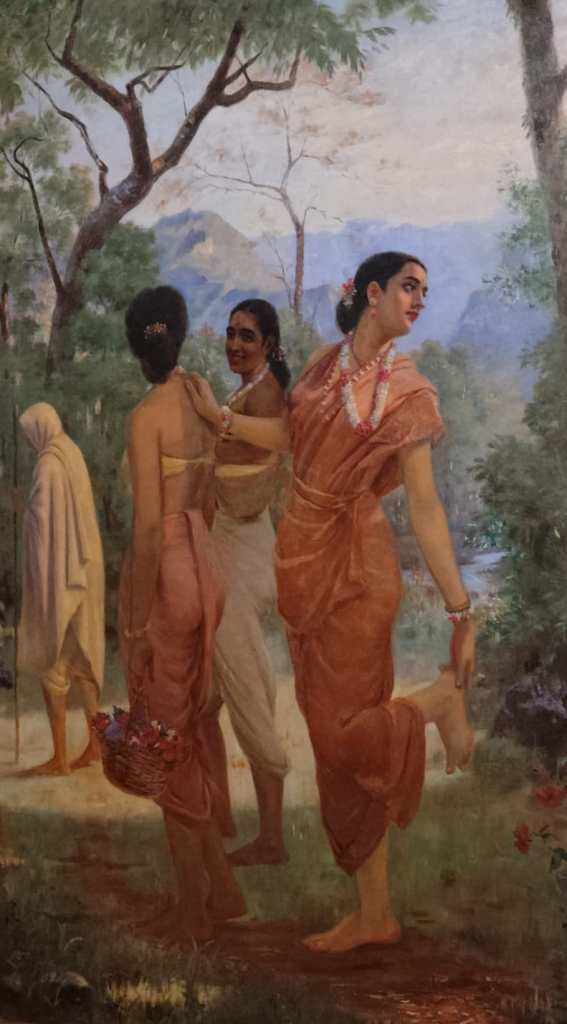
In the renowned epic painting, Shakuntala, the woman turns, pretending to remove a thorn from her feet, only to gaze at her lover Dushyantha, while her friends call her bluff. In another painting, the lovelorn Shakuntala writes a letter to Dushyantha, requesting him to return to her.
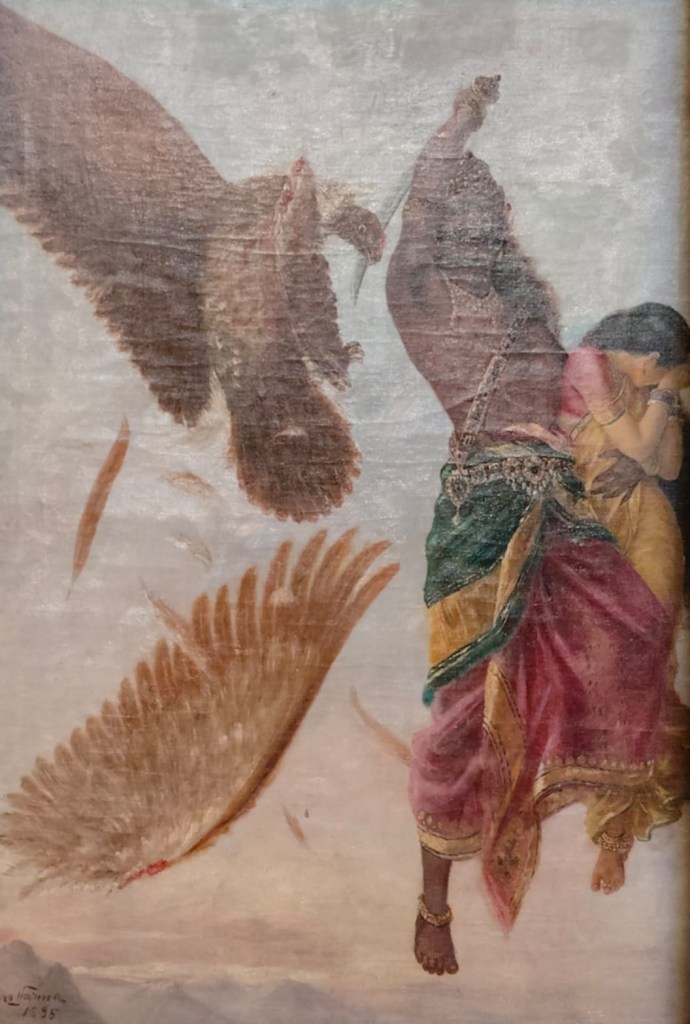
One of my personal favorites, Jatayu Vadham, depicts a pivotal scene from Ramayana. It shows the exact moment Ravana hacks at the vulture king, Jatayu’s wing, during the abduction of Sita. A terrified Sita covers her face in agony, unable to watch the brutal death of the noble bird. But she could also be praying for an escape, or disgusted by how Ravana was holding her captive.
I love how dramatic and impactful the storytelling of this painting is. Any artist is a storyteller, but Raja Ravi Varma had a knack for picking the exact moments that could best capture the essence of a character.
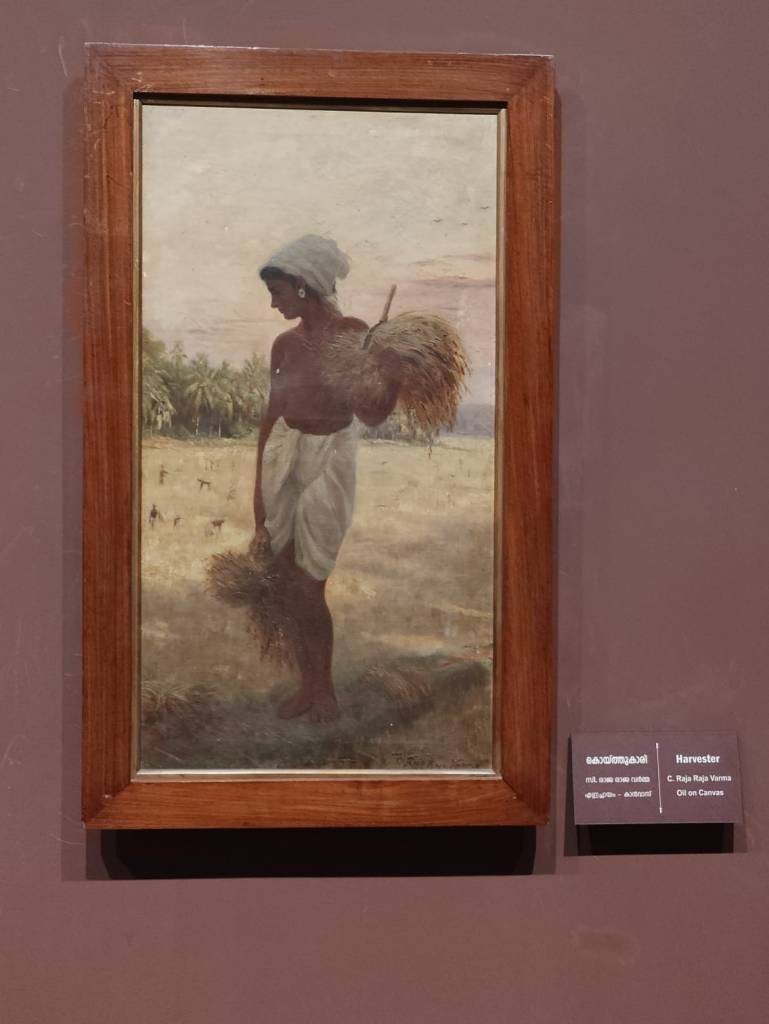
Though he mostly captured elite women in his canvas, paintings like ‘The Harvester’ portrayed regular working women of his age. A few other interesting examples include Abhisarika (a prostitute), a vegetable seller, a Parsi woman, a flower gatherer, a Marwari woman, a woman selling local liquor or arrack, a young girl giving charity to an old woman, gypsies of South India, and a girl with a goat.
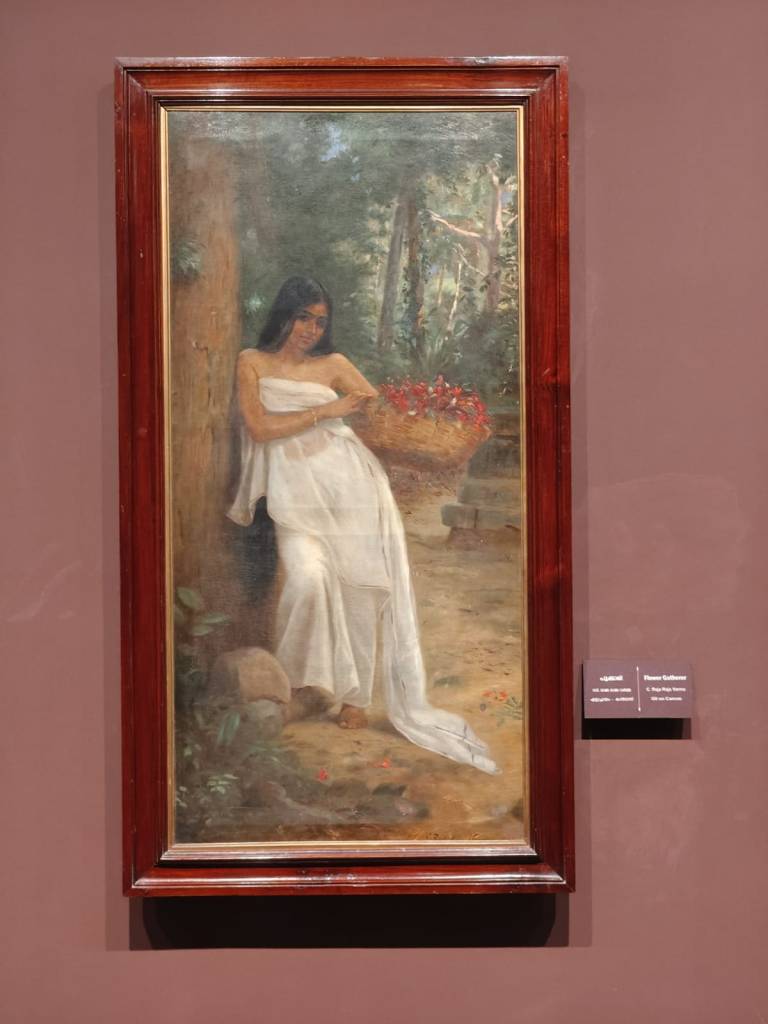
I understand the criticisms floating online about how underrepresented lower caste women are in his paintings, or that the fluid femininity aesthetic in his paintings is unachievable in real life.
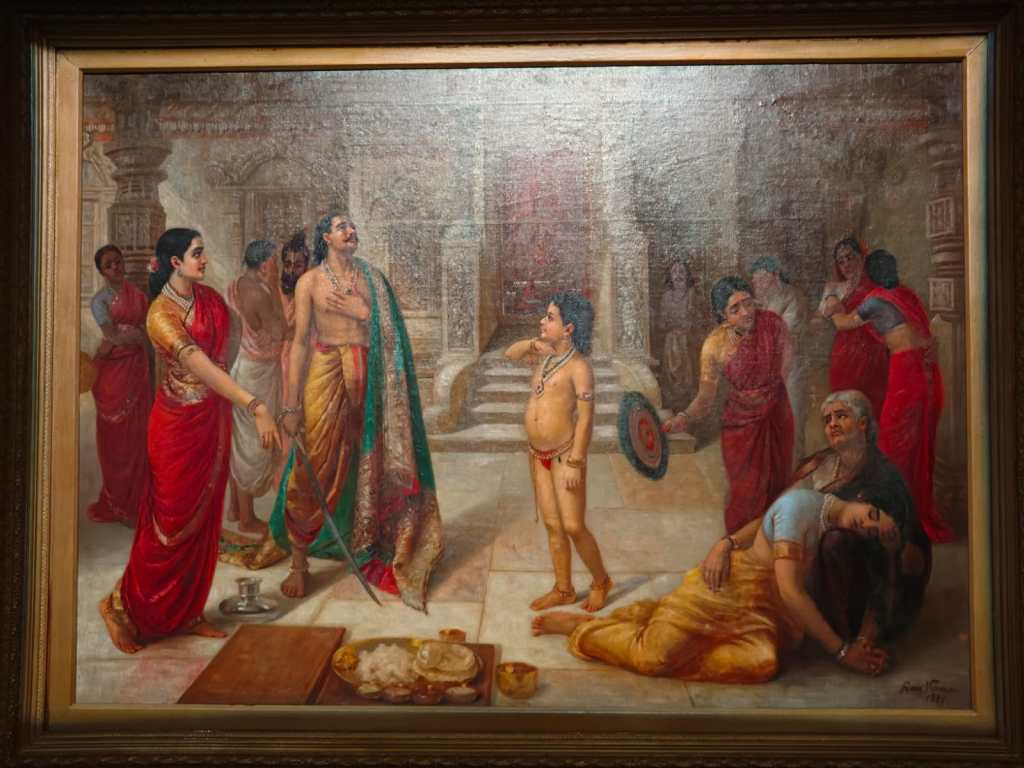
Growing up, I could imagine my mom as a Ravi Varma painting, but I never aspired to be one. That partly stemmed from the body shaming, colorism, and pretty privilege prevalent in my society, but also from the realisation that the beauty standards in my country are grossly skewed. Even in modern-day India, our movies don’t represent our women well.
Tore Away My Gaze
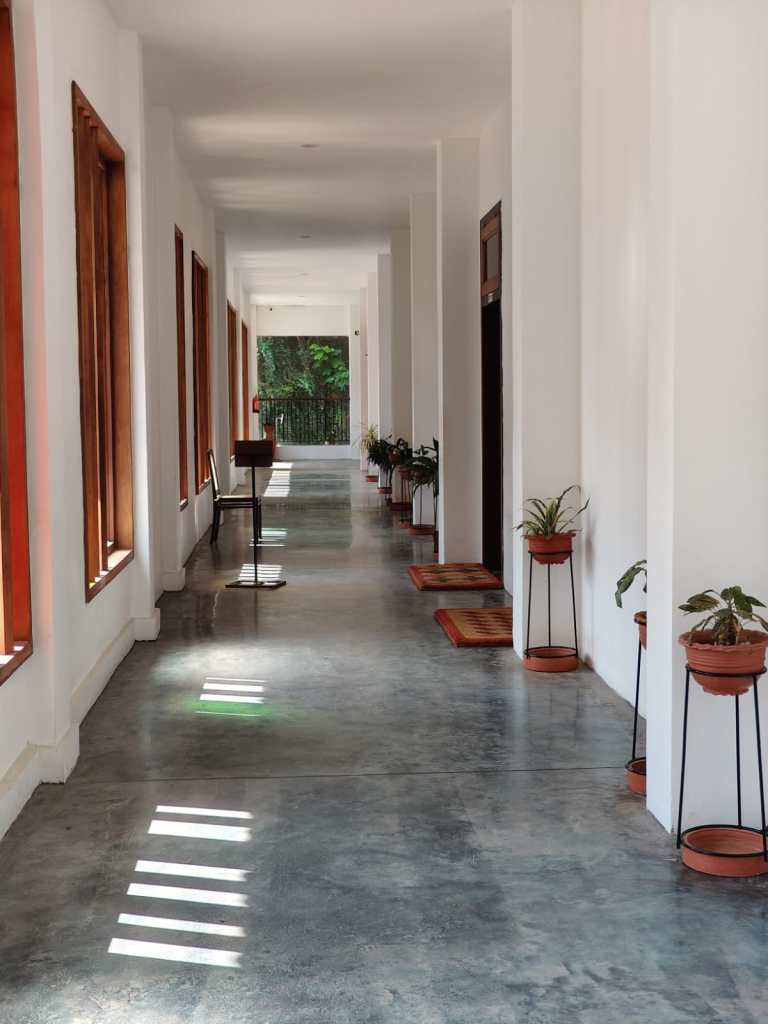
I loved the overall ambience and curation of this art gallery. I loved the paintings softly lit by yellow lights and the long corridors of the building. Though the same light made it extremely difficult to capture decent photos without glare.
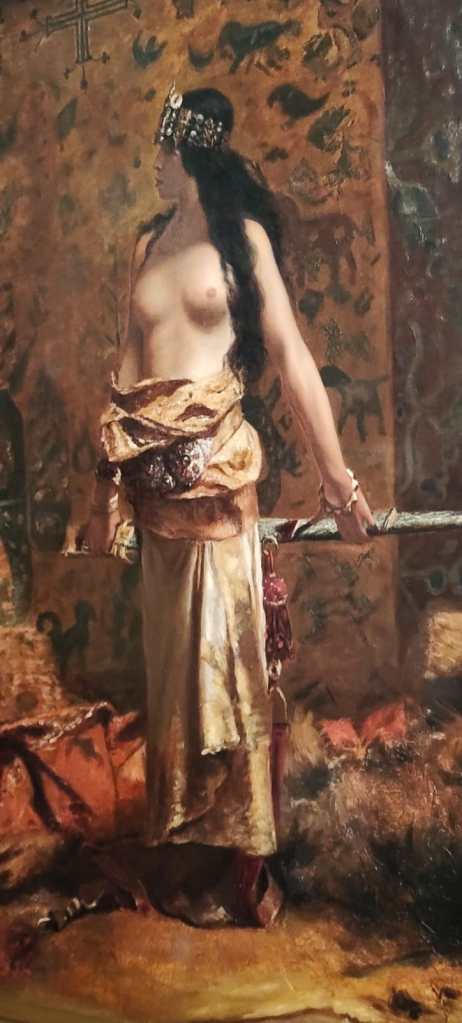
It was my second visit to the gallery, but I knew there would be more, probably with friends or with my siblings, nephews, and nieces. I could spend a whole day there, just staring at the paintings, absorbing their spirit and beauty. I wished I could imprint them on my mind forever, and not click any photos at all. Again, I wished my mom’s health permitted her to visit all these places with me. To me, she will always be a Ravi Varma painting.
By 3:30 pm, I walked out of the Raja Ravi Varma Art Gallery to explore the nearby building, hosting Russian, Japanese, Bengal Art, and Indian murals.
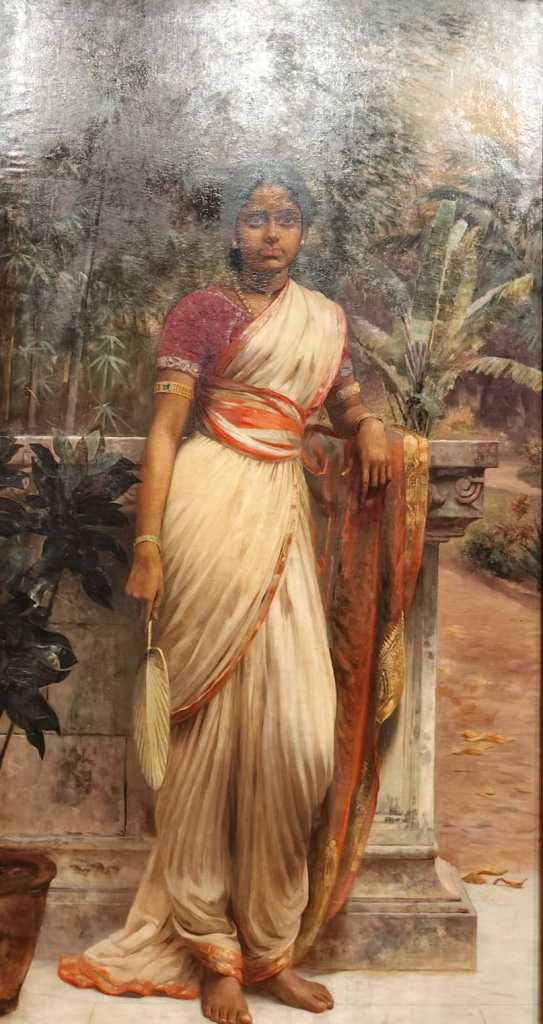
Just as I was about to leave, one of the staff members suggested I take another look at the large ‘Lady with a Fan’ painting. Like Mona Lisa’s gaze, the legs of the woman in the painting moved from left to right as I shifted from the left side of the painting to its right, and vice versa. I thanked the guy for telling me about it. I would never have noticed that optical illusion on my own, without his help.
I remembered the Prophet Isaiah quote that had baffled me earlier. To me, beautiful are the feet of those who are loving, kind, and teach me new things.
Author’s Notes
~ All content on this blog is the intellectual property of the author. © 2026 Lirio Marchito. All rights reserved.
~ This blog is part of a series exploring my travels through Trivandrum, the capital city of my home state, Kerala, in India. You can read more posts from this series here. Trivandrum | Kerala| India

 Lirio's Wanderings

.jpg)

3 thoughts on “Trivandrum Series: Spellbound at Raja Ravi Varma Art Gallery”