
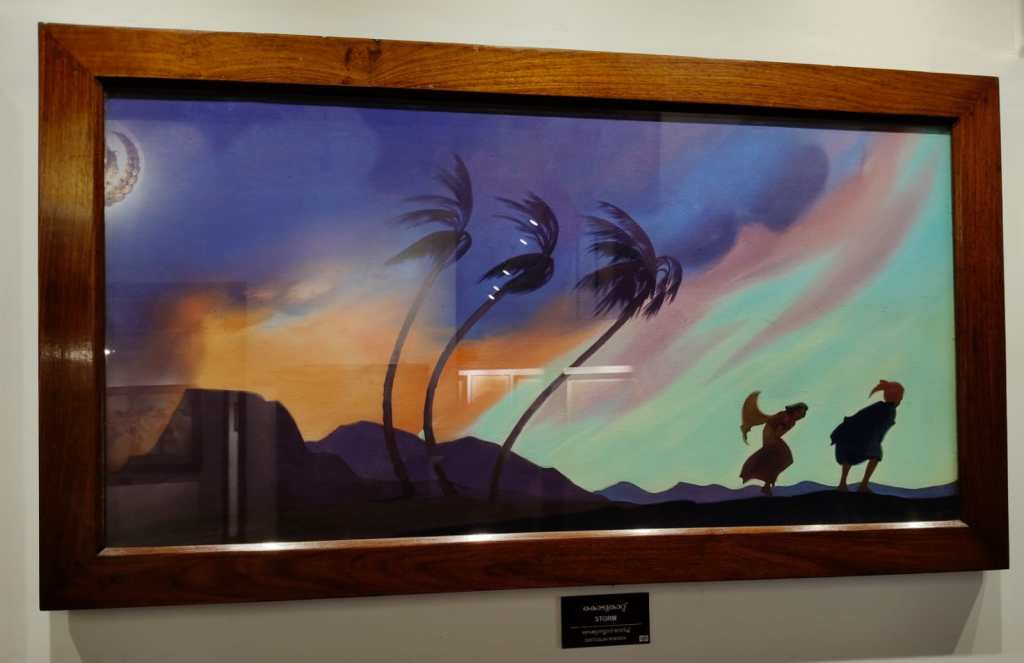
“Where did I come from, and what am I supposed to be doing?
I have no idea.
My soul is from elsewhere, I’m sure of that,
And I intend to end up there.” – Rumi
Finally, I walked out of the spellbinding Raja Ravi Varma Art Gallery in Palayam and entered the white building next to it. From the staff, I learned that all these art galleries housing paintings of K C S Paniker, Raja Ravi Varma, and the final building hosting Russian, Japanese, Bengali art, and Indian murals come under an umbrella term – Sree Chitra Art Gallery.
Since I had already explored Ravi Varma’s art, I had this unconscious bias in my mind – “I’ve devoured the Master painter’s works. The rest might be basic; let me just skim through it.”
Oh, great artists of the world, forgive this wanderer’s ignorance.
I was jolted awake by the Roerich paintings. These paintings were mainly soaked in different shades of blue. But what grabbed my attention was their trance-like quality.
It reminded me of something profound and mystic. I couldn’t pinpoint it back then, but in retrospect, I know those paintings reminded me of Rumi’s Poetry.
So, I couldn’t help but place a Rumi verse next to these pictures. But fair disclaimer, the photos don’t even give 10% justice to the original paintings.
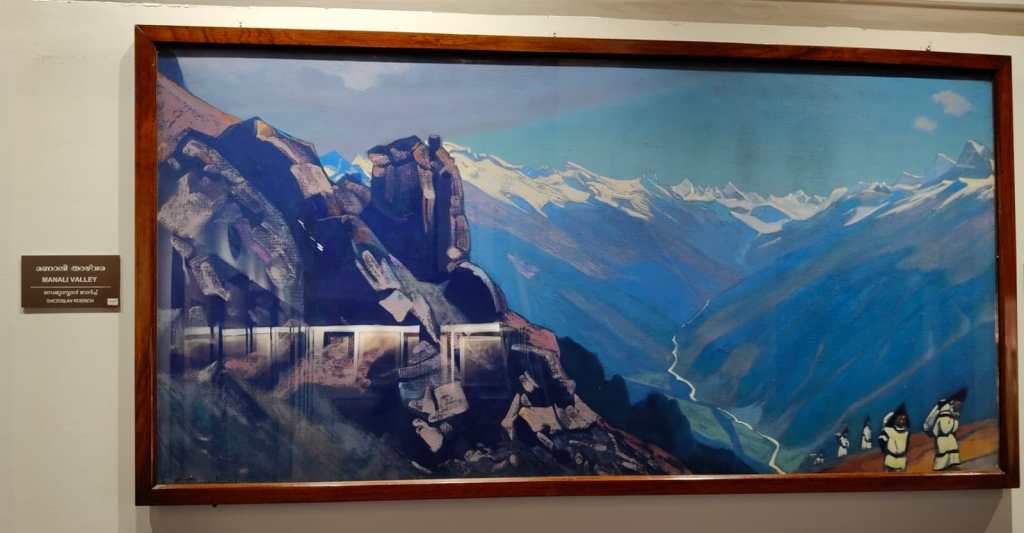
One of my favorite Rumi Verses:
“But don’t be satisfied with stories, how things
Have gone with others. Unfold
Your own myth, without complicated explanation,
So everyone will understand the passage,
We have opened you.
Start walking toward Shams. Your legs will get heavy
And tired. Then comes a moment
Of feeling the wings you’ve grown,
Lifting.” – Rumi
From the signboards, I learned a bit about the artists behind these paintings.
Nicholas Roerich was born on October 9, 1874, in St. Petersburg, Russia, to a Baltic German father and a Russian mother. He was a polymath. That is, in addition to being a painter, he was also a writer, archaeologist, theosophist, philosopher, and public figure.
(Now I know what my first wish to the Genie should be; I want to be a polymath, too. Sigh!)
In his youth, Nicholas was influenced by Russian Symbolism, a movement in Russian society centred on the spiritual. He was interested in hypnosis and other spiritual practices, and his paintings were said to have hypnotic expression. (I agree. I felt it, too.)
He was also a dedicated activist for the cause of preserving art and architecture during times of war, and was nominated several times for the Nobel Peace Prize longlist. His efforts led to The Roerich Pact, or the Treaty on Protection of Artistic and Scientific Institutions and Historic Monuments, signed in 1935.
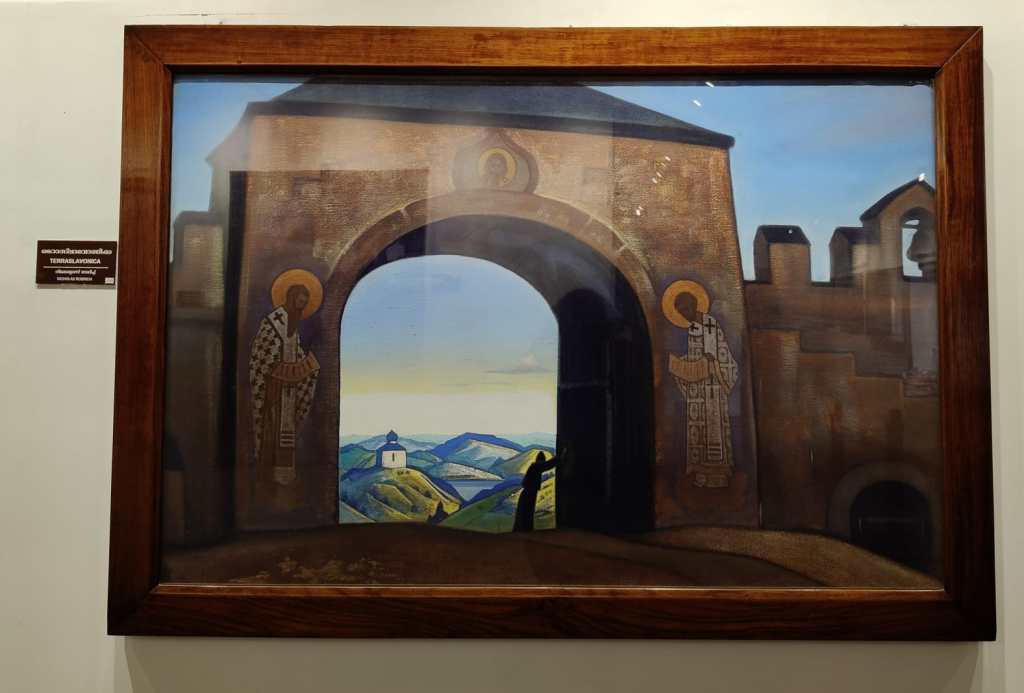
“If you cause injury to someone, you draw
That same injury toward yourself. My treachery
Made my friend a traitor to me. This repetition
Must stop somewhere. Here, in an act of mercy.” – Rumi.
I wondered what his connection to India was. Apparently, he was a globetrotter too, who spent many years in India. In fact, he died here in India, at Naggar, Himachal Pradesh, on December 13, 1947.
Meanwhile, Nicholas’ son, Svetoslav Roerich, had a longer bond with India. Born on October 23rd, 1904, he was a painter and trained architect.
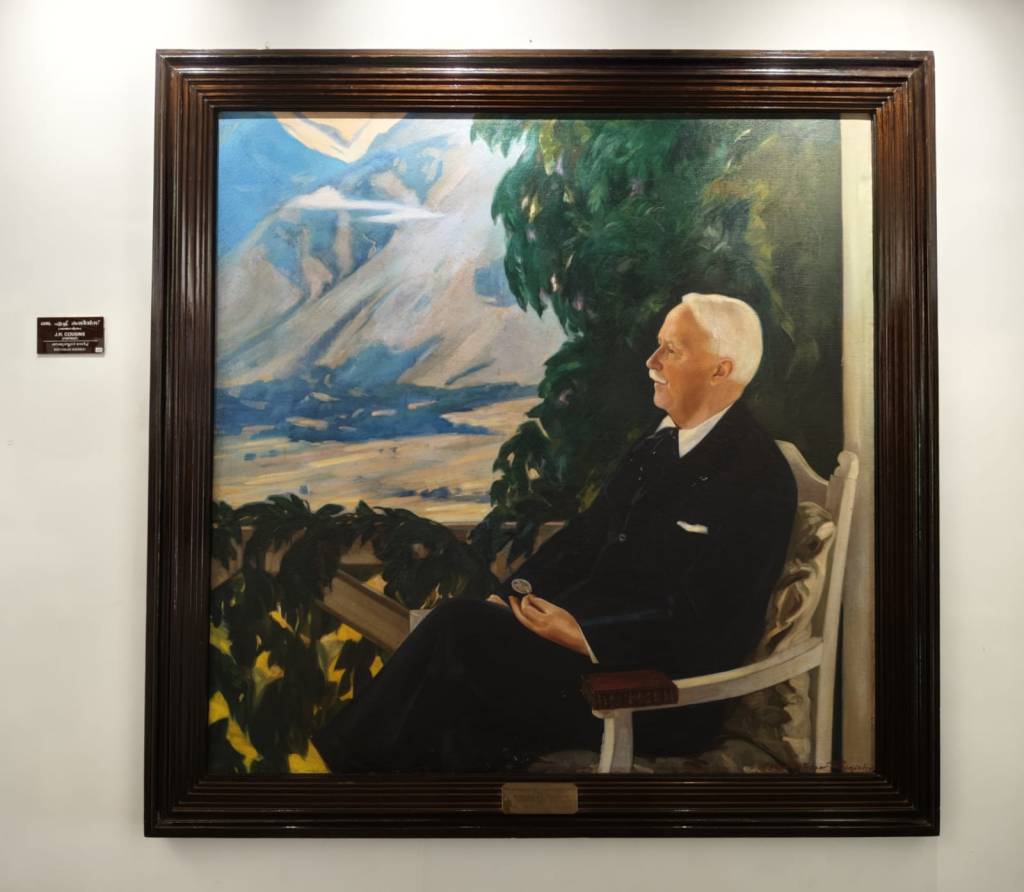
In 1945, he married the Indian film actress Devika Rani. After marriage, the couple moved to Manali, in Himachal Pradesh, where they got acquainted with the Nehru family.
He mainly painted landscapes and portraits. His portraits of Nehru and his daughter Indira Gandhi, both former prime ministers of India, adorn the Central Parliament Hall in New Delhi. Svetoslav died in 1993.
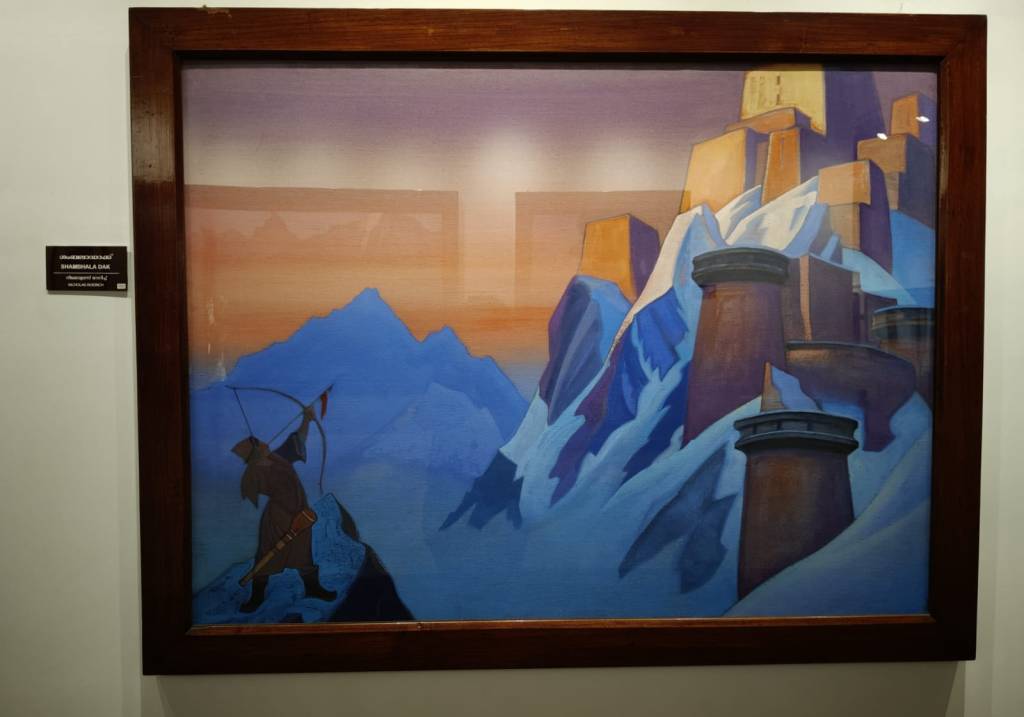
“Out beyond ideas of wrongdoing and rightdoing,
There is a field. I will meet you there.” – Rumi.
I was mesmerised by his portrayal of the mountainous terrains of Himachal Pradesh, especially the tranquil sights from Manali and portraits like the ‘Kulu Man.’
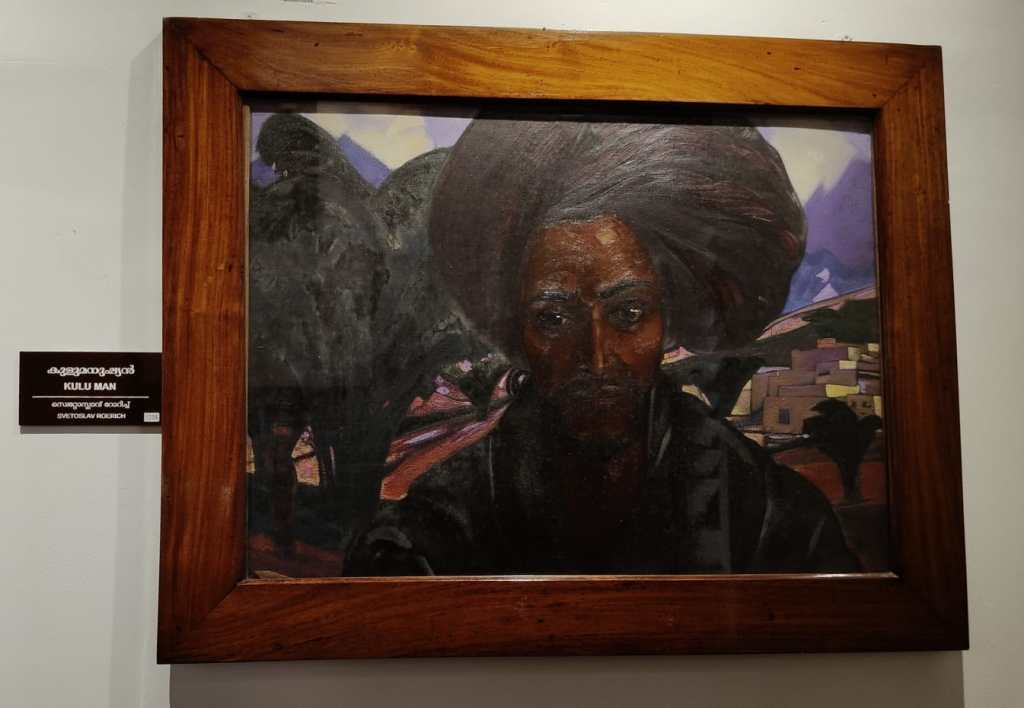
“I have a thirsty fish in me
That can never find enough
Of what it’s thirsty for!
Show me the way to the ocean!
Break these half-measures,
These small containers.” – Rumi
Oh, I can go on and on and on about this.
In Kerala, there’s a classic joke about people who deflect when caught off guard. Imagine you asked these people to write about cows. Because they know nothing about cows, they would quickly point out that cows are usually tied to coconut trees and give us a speech about coconut trees. I fear my mind has played the same trick on you here.
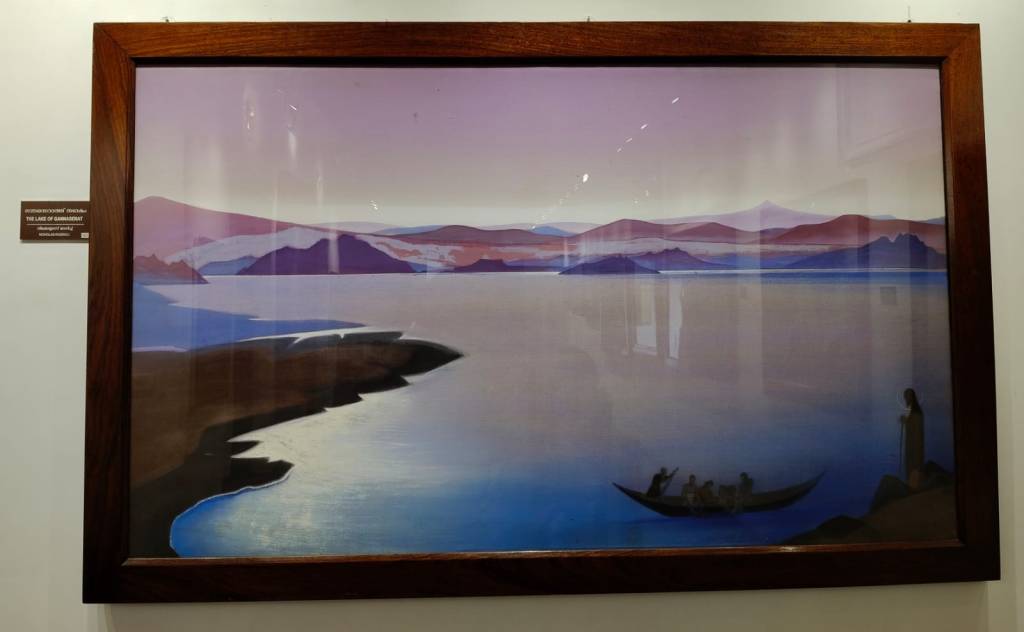
“This is how it always is
When I finish a poem.
A great silence overcomes me,
And I wonder why I ever thought
To use language.” – Rumi
Author’s Notes
~ All quotes used in this blog are Rumi’s verses from the book The Essential Rumi.
~ All content on this blog is the intellectual property of the author. © 2026 Lirio Marchito. All rights reserved.
~ This blog is part of a series exploring my travels through Trivandrum, the capital city of my home state, Kerala, in India. You can read more posts from this series here. Trivandrum | Kerala| India
 Lirio's Wanderings