
It’s safe to say that I was bowled over by the Roerich paintings exhibited in the Sree Chitra Art Gallery in Palayam. I stood rooted and stared at the pictures as if I were hypnotised. I highly recommend visiting the gallery and taking a close look at those pictures.
I was excited to learn that the gallery also featured ancient Chinese and Japanese paintings, Tibetan Thangkas, and Indian murals. There were also modern paintings by renowned Indian painters such as Rabindranath Tagore (a polymath who also wrote India’s national anthem) and Dr P Chowdhary.
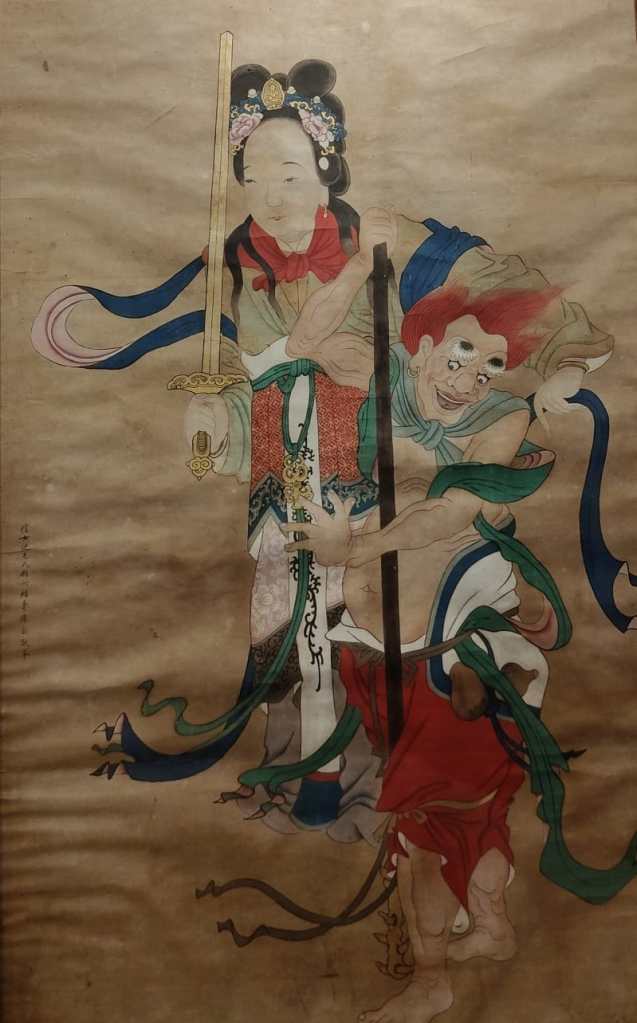
There were scores of paintings that made a deep impression on me. I’ve featured a select few in this blog. This curation is based on my limited understanding of the respective cultures, their art forms, and the quality of the photos I clicked.
Chinese Paintings
Traditional Chinese painting style generally uses the same techniques as calligraphy. Here, brushes dipped in black ink or colored pigments were used to draw on paper scrolls or silk.
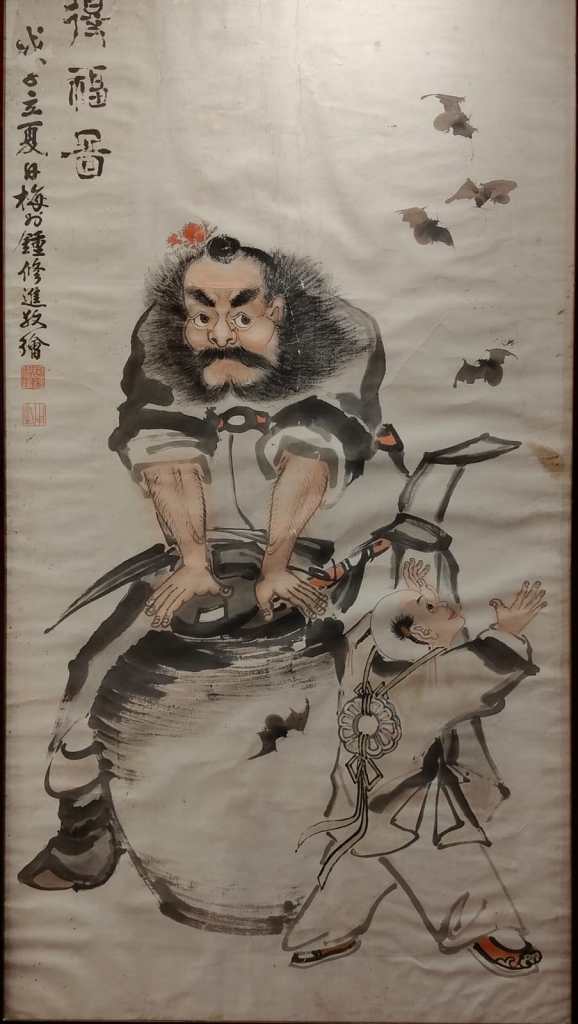
Flowers in bloom, women in traditional attire whispering inside courtyards or from open balconies, men atop horses, emperors flying dragons, and Ma Ku, the Chinese God of Mercy, were a few of the recurring elements in these paintings.
Japanese Paintings
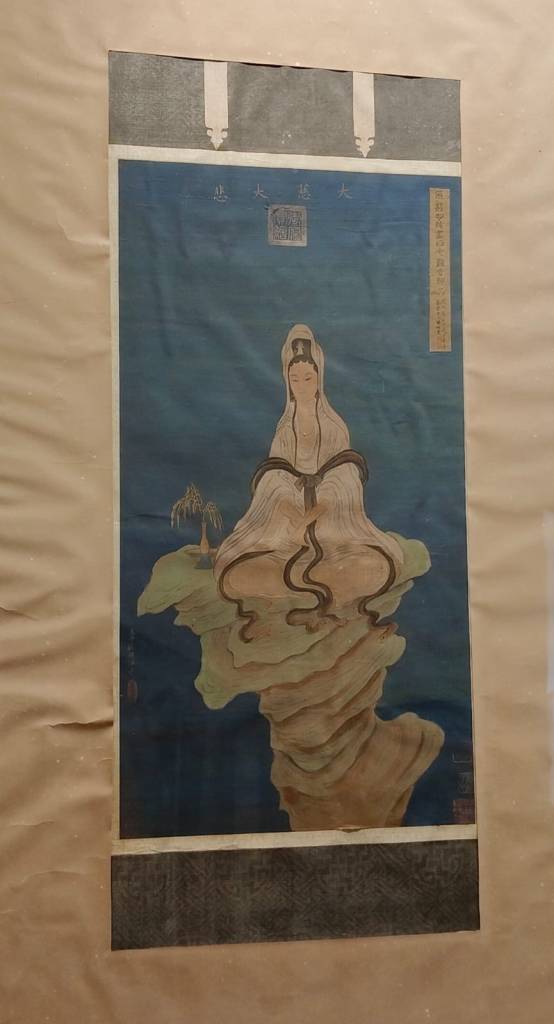
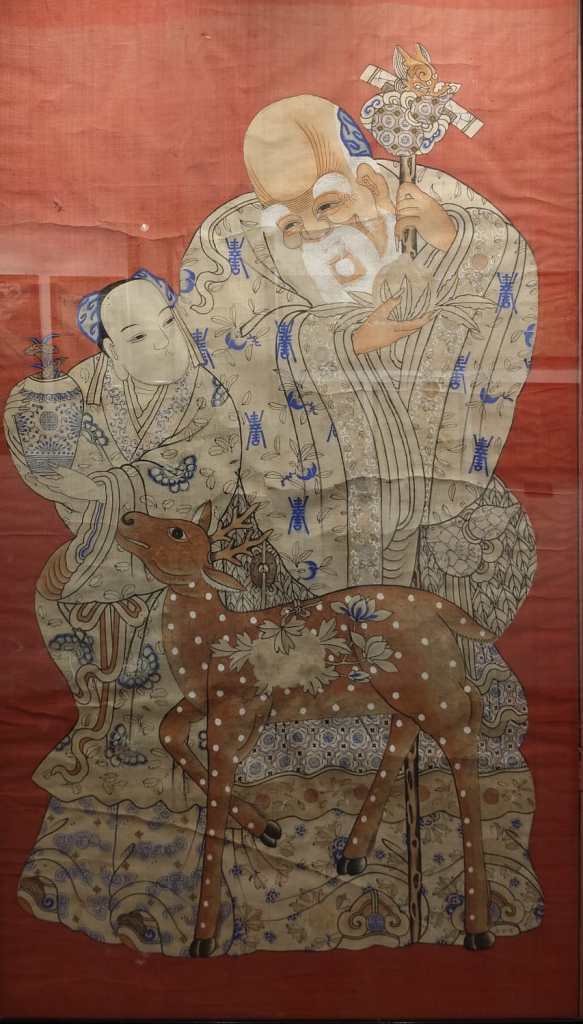
The ancient Japanese paintings showed a clear influence of the traditional Chinese style, but were also easily distinguishable because of the ladies in kimonos, the distinct facial features of Japanese men, and the recurring sight of Mount Fuji (Fujiyama) in the background.
Images of Japanese deities, especially a Bodhisathwini intrigued me.
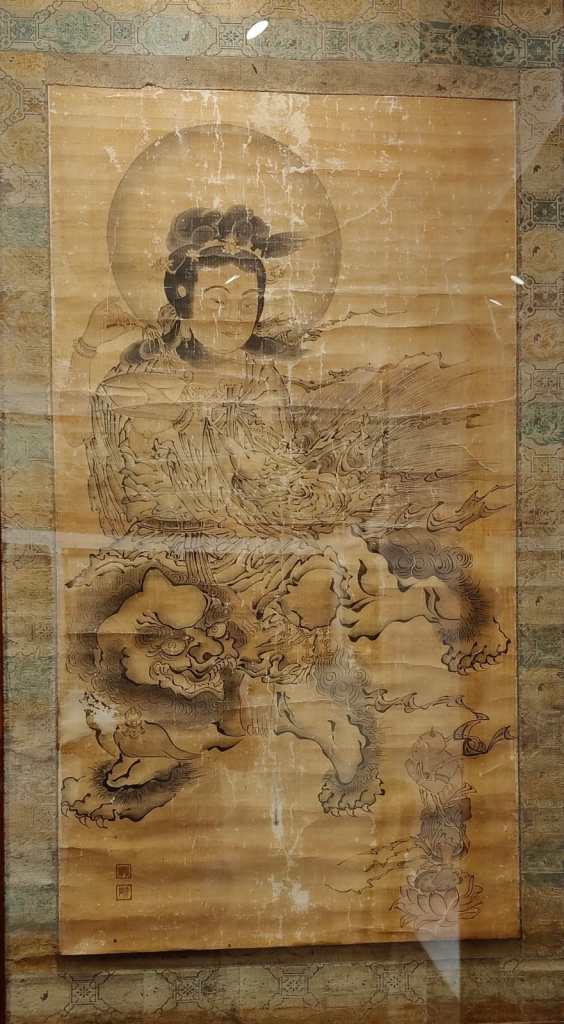
“In Japanese Buddhism, a bodhisattva (known as bosatsu) is an enlightened being who, out of infinite compassion, delays achieving ultimate nirvana to remain in the cycle of rebirth and help all sentient beings attain liberation.”
Tibetan Thangkas
From the signboard, I learned that “Thangka painting is an ancient Tibetan Buddhist art form on cotton, silk applique, usually depicting a Buddhist deity, scene, or mandala. They are traditionally kept unframed and rolled up when not on display.”
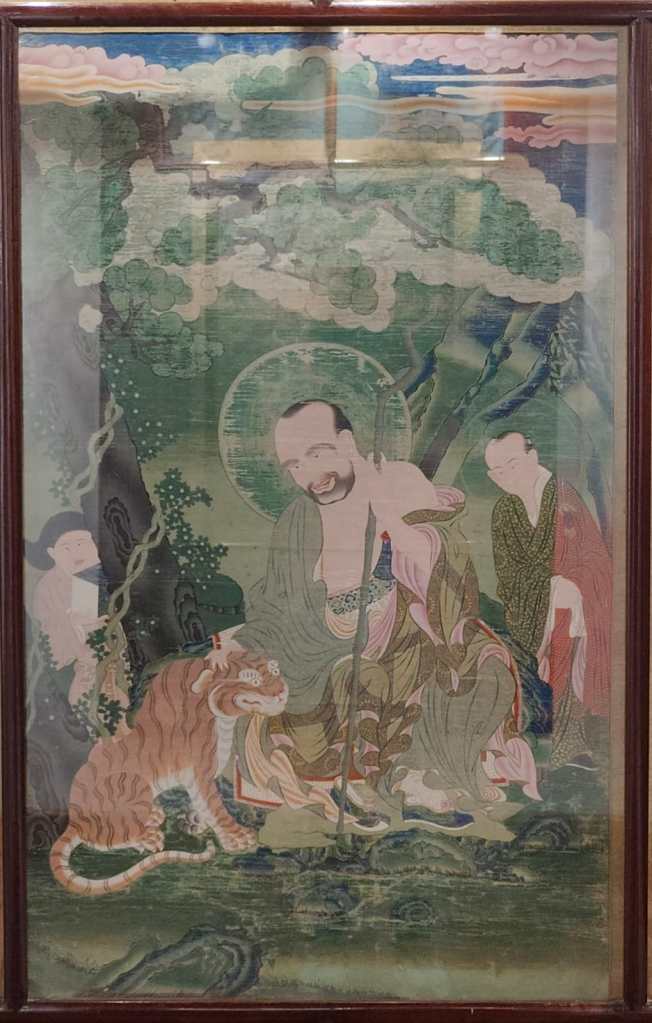
These paintings depict themes like the life of Buddha and the wheel of life – a visual representation of the Buddhist concept of Samsara or cyclic existence. The concept of death and rebirth is familiar to me as it’s also present in Hinduism.
These paintings have a symmetrical composition – a central deity surrounded by many small figures. But what piqued my interest the most was this detail – the artists who created Thangkas painted the deities in very specific proportions, thus ensuring utmost beauty, as it is believed that the deities might inhabit these paintings.
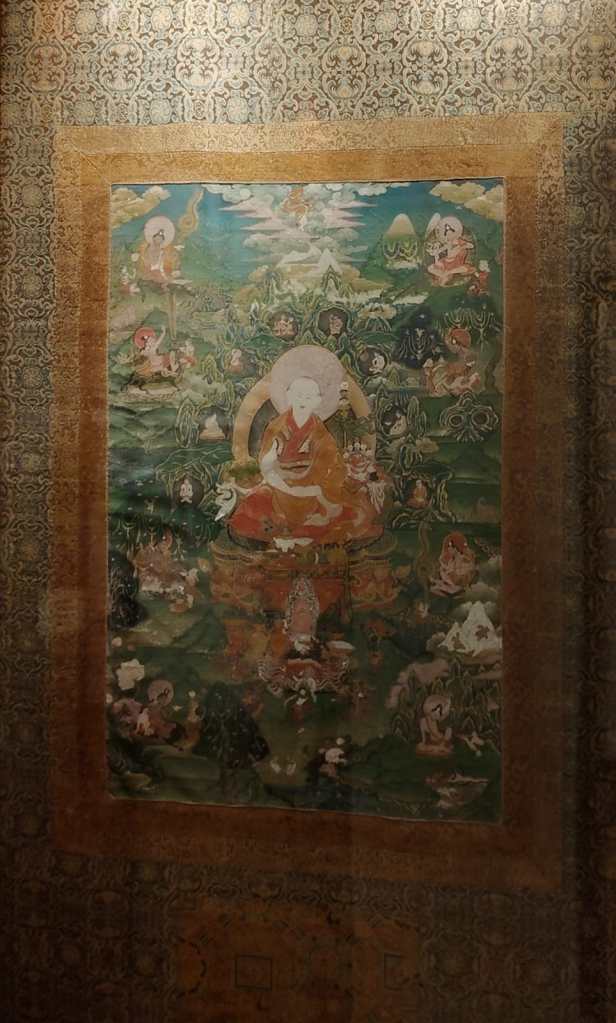
Reading that detail gave me goosebumps – what if an ancient deity, inhabiting a thangka, was staring right back at me?
Indian Murals
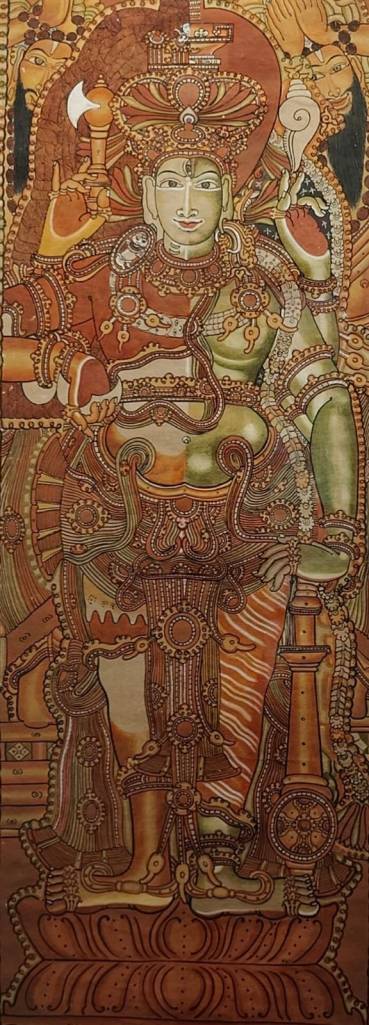
Indian murals usually depict religious themes from Buddhism, Jainism, and Hinduism. They often portray deities and scenes from Hindu epic mythologies such as the Ramayana, the Mahabharata, and the Jataka tales, which detail the life of Gautama Buddha. These paintings can be found in various spaces, ranging from cave frescoes to temple walls, especially in my native Kerala.
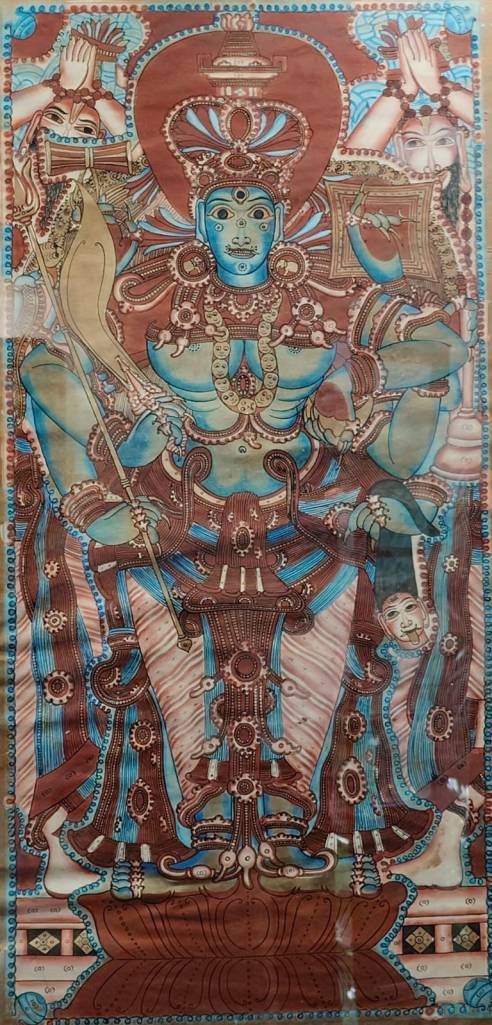
Above is a Mural painting of Bhadrakali – she is a fierce form of the Hindu supreme goddess Adi Shakti. In India, parents often affectionately name their daughters after Hindu Goddesses such as Lakshmi, Shakti, Saraswati, and Parvati. But many South Indian girls like me identify more with terms like Moodhevi (Hindu Goddess of misfortunes, poverty, and bad luck) or Bhadrakali (Hindu Goddess of War), because that’s what our parents used to call us when we dozed off lazily in the evenings or rebelled at home.
Playful Colours
By 4 pm, I exited the art gallery and walked towards another important building within the Palayam Museum Complex – the Natural History Museum, but my mind was still wandering in the colorful worlds painted on those canvases. The level of talent, hard work, and mastery at play in those pieces was mind-boggling.
I, too, have a set of crayons hidden in the bookshelf at my home. At times, I take it out and draw silly pictures of a sunset or a flower. It’s so therapeutic. It reminds me of a certain three-year-old girl who used to draw bunny rabbits with a daisy tucked behind their ears for every houseguest in her grandma’s house. It also brings to mind a schoolgirl in a blue pinafore who used to stand in front of the principal’s noticeboard and ogle at the oil painting of fresh flowers in a vase, drawn by one of her painter friends.
We don’t have to be good at something for it to be good for us, right? We can pursue art just for pure joy and childlike fun. It’s not just healing but also liberating, especially since we live in a capitalist world where the size of our paychecks, savings, and investments determines our worth and value.
Author’s Notes
~ All content on this blog is the intellectual property of the author. © 2026 Lirio Marchito. All rights reserved.
~ This blog is part of a series exploring my travels through Trivandrum, the capital city of my home state, Kerala, in India. You can read more posts from this series here. Trivandrum | Kerala| India
 Lirio's Wanderings