
Please read the first part of the blog here.
Madasseri Waterfalls
Our next stop was the Madasseri Waterfalls. Even from the roadside where our traveller was parked, we could see the stream overflowing. Buddy expressed concern that we wouldn’t be able to cross the stream and see the actual waterfall, due to the rising water levels and strong currents.
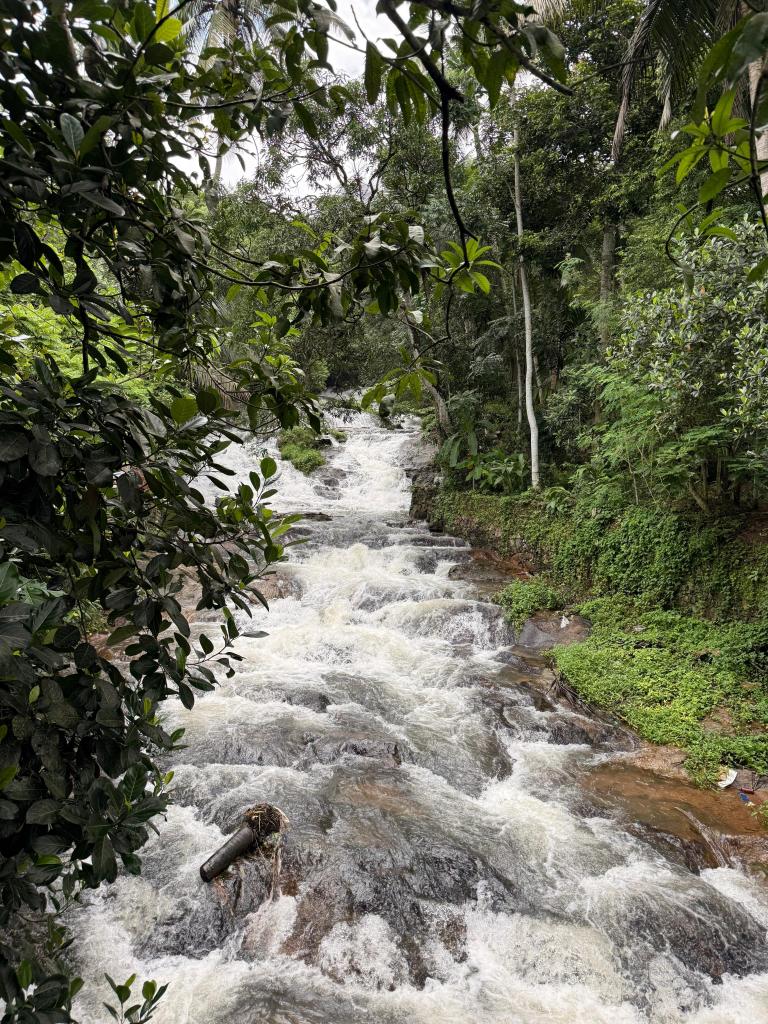
Sadly, her suspicion turned out to be true. However, at the spot where they usually crossed the stream, we took off our shoes, folded up our jeans and pants, and played in the water for some time. The water was so cold and refreshing; we even washed our faces with it.
Plankudikavu View
By 12:40 pm, our stomachs were already growling in protest. So when our traveller headed to another hillside, we couldn’t help but moan, “No, we can’t climb another hilltop.” Luckily, the traveller rode all the way to the top of the hill, where we were surprised to see other cars and vehicles parked.
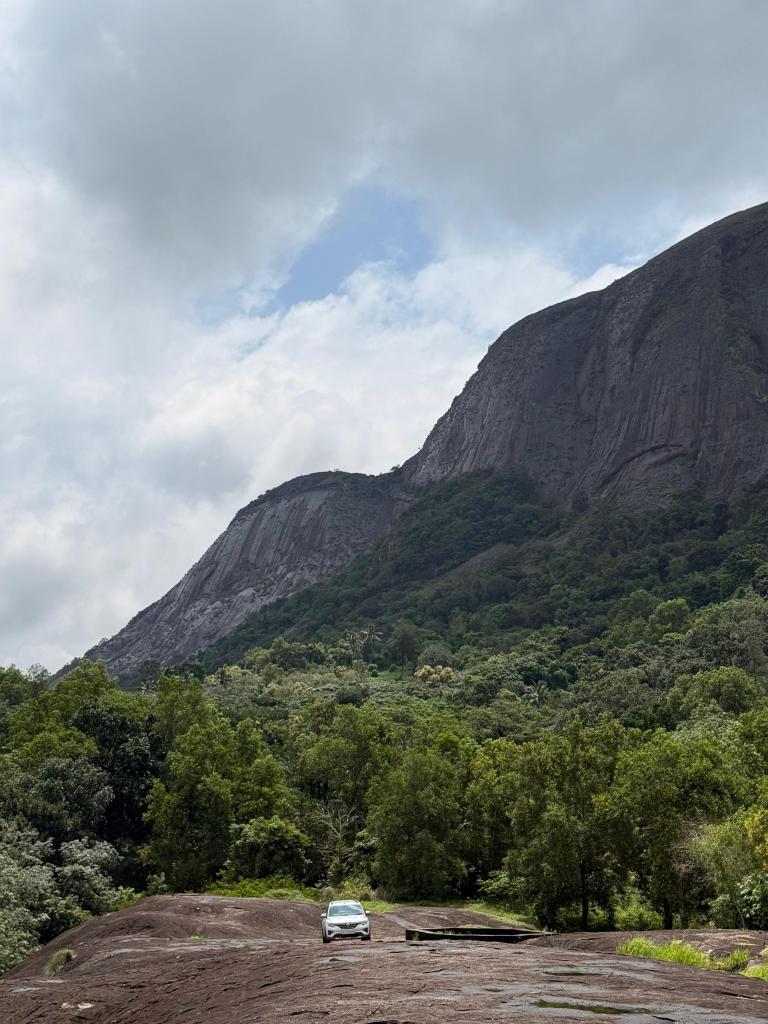
Without much physical exertion, we reached the viewpoint atop the rocks called Plankudikavu Vew. From this point, we could see some areas of Tamil Nadu in the front. Behind, we could see the famous hills like Koonichimala, Kondaketti, and Thekkan Kurishu Mala, hidden beneath a ribbon of fog or cloud.
Sumesh Kottoor, a YouTuber whom I met during Kathirmudi Trek, was also there. He gave us a brief of the place and explained how he has been helping to conduct various treks and hikes in the Amboori area. He also recorded our video reviews. Though it was not part of our original itinerary, he suggested that we visit the Narrow Bridge and the Kumbichal Kadav Bridge before visiting the last stop on our itinerary – Mayam Kadav. But of course, all this had to wait until lunch.
Lunch – A Homely Meal
Close to our next spot, Narrow Bridge, the traveller left us before a gated house. Sumesh Chetan and Saji Chetan handed out a packed meal and a bottle of water to each of us from the backseat of the car they were travelling in. A sumptuous homemade meal of boiled rice, beetroot thoran, curd, coconut chammanthi, moru curry, kondattam mulak, pickles, and a fluffy egg omelette.
There was a shortage of chairs, so when the first bunch of people had lunch, others waited for their turn. Some simply sat on the floors, too hungry to wait.
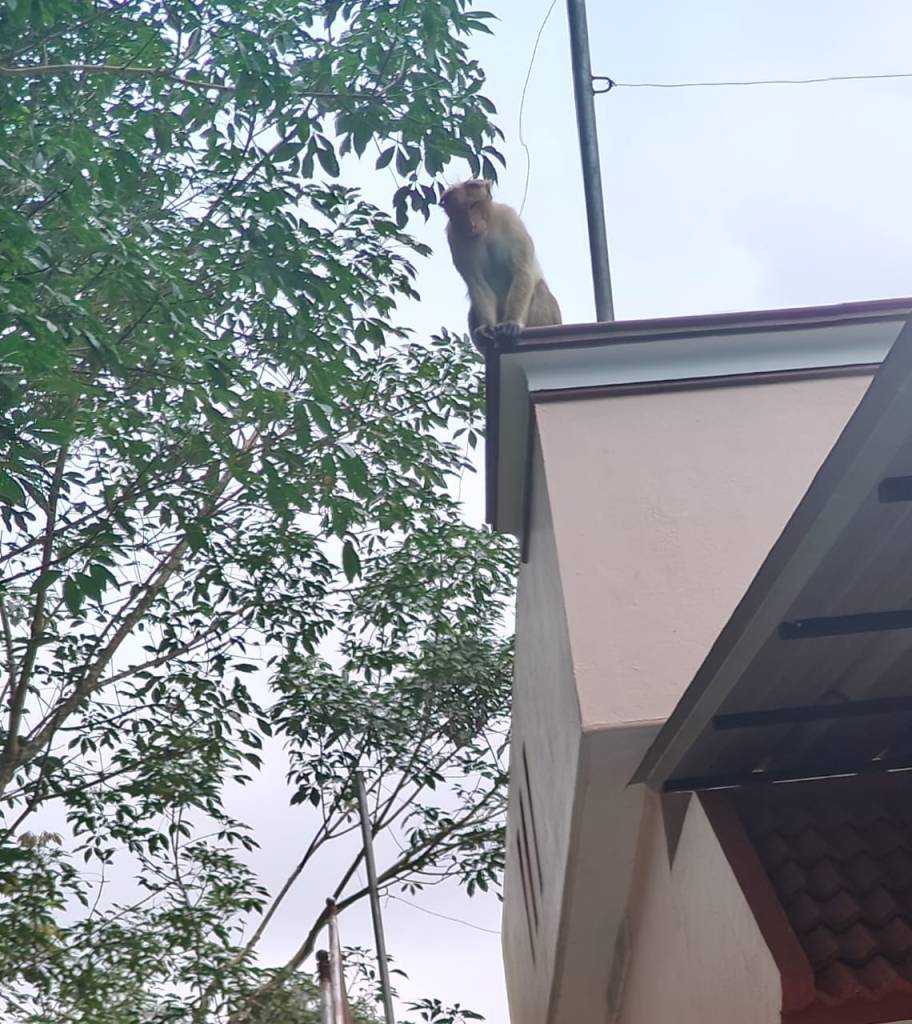
Leftovers were placed in two waste baskets: plastic and paper in one, and the food waste in another. A troop of monkeys and their infants soon arrived, eyeing the leftovers in the wastebasket. Saji Chetan had to shoo them away. I sent pictures of the monkeys to my bestie, and we ended up trolling each other.
Narrow Bridge
Even from a distance, the Narrow Bridge and the pristine, greenish water underneath it looked ethereal. The purity of the water made me wonder if I was still in Kerala or in a foreign country.
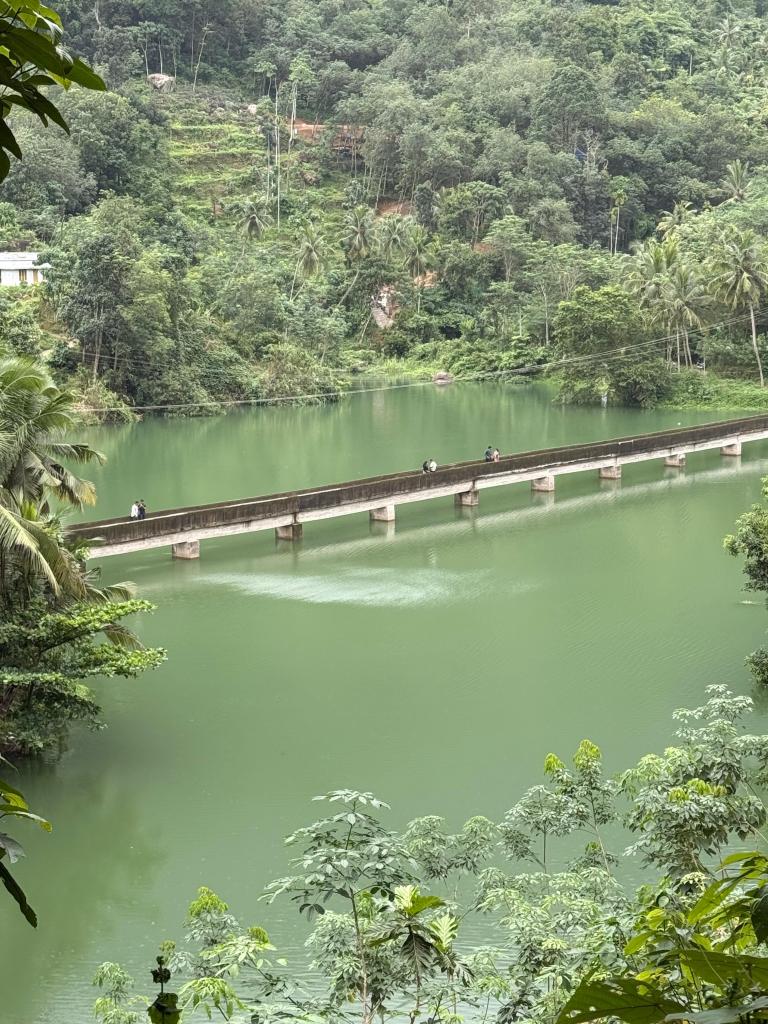
Sumesh Chetan explained that the area under the bridge was fully empty and dry two days ago. But got filled up by the heavy rains. That explained the quality of the water. If you looked closer, you could see wild plants with yellow flowers submerged in the water and tadpole-like insect larvae swimming over them. It looked like an enchanted garden caught inside an aquarium.
True to its name, the bridge was so narrow that only two-wheelers and barely an autorickshaw could pass through it. Every time a vehicle came, we all had to move to one side and stand in a row to let it pass. I couldn’t help but wonder, since they put the effort into building a bridge, why couldn’t they build a slightly bigger one? Why so narrow?
After exploring the spot, we had to wait for our driver to arrive. He wasn’t confident enough to reverse the vehicle on the narrow, curvy, and steep road near the bridge, so he drove it to a side road to reverse it.
Not just him, many other vehicle tyres were screeching their way through these roads. If Amboori becomes a more popular tourist spot, the narrow, steep roads would definitely be a problem. Too many vehicles could easily choke the roads on this route, too.
Kumbichal Kadav
By 3 pm, we left the Narrow Bridge and boarded the traveller. This time, it sped to the Kumbichal Kadav. To an ignorant visitor like me, it came across as a simple, concrete bridge. But the pristine, green water, and the view of the Thekkan Kurishu Mala on one side made the trip worth it.
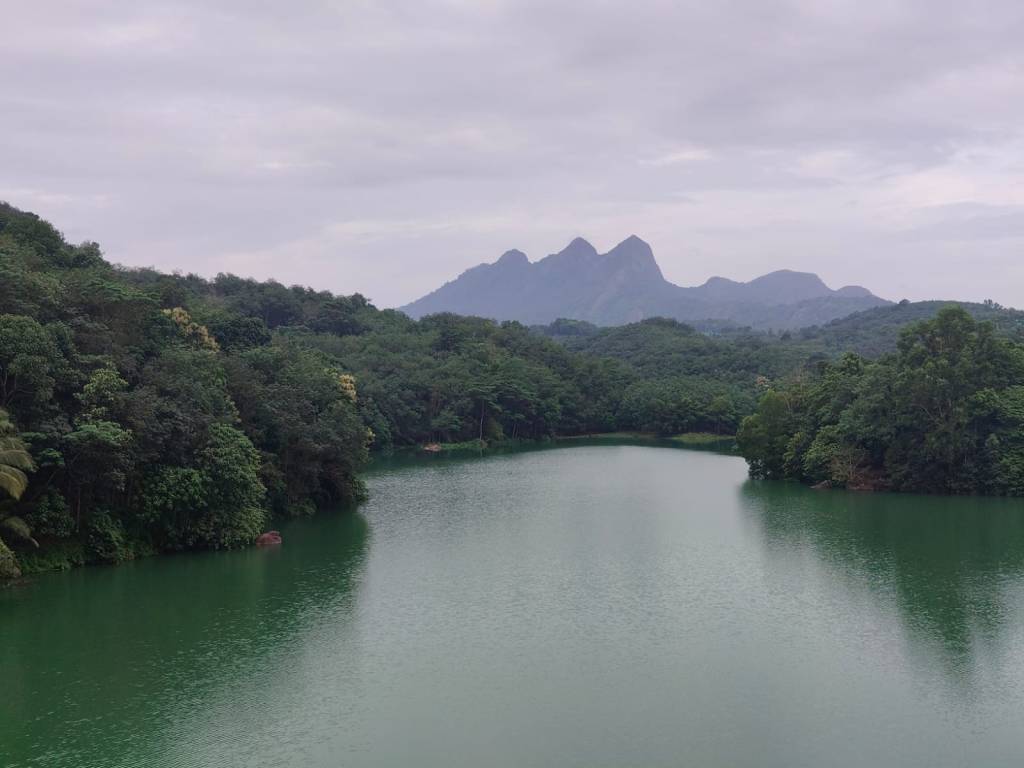
If our buddy Reshma had never told us the backstory behind this bridge, I wouldn’t have understood why Sumesh Chetan or the other natives insisted we visit this bridge. She wrote on her status:
“Kumbichal Kadav Bridge may look like just another bridge to many, but for the people of Amboori, it’s an emotion. Opened in 2026, the bridge ended decades of isolation for over 1000 families across 11 tribal settlements. Until then, residents depended on country boats to cross the river, facing immense difficulties during monsoons, at night, and in medical emergencies. More than a structure connecting two riverbanks, this bridge connects lives, hopes, and opportunities. Combined with the breathtaking beauty of Amboori, Kumbichal Kadav Bridge stands as a symbol of progress, resilience, and human connection.”
Moottil Pazham
While Bhagu and I were exiting the Kumbichal Kadav Bridge and walking towards the traveller, we saw a few teenagers, possibly from the tribal community, selling wild berries on the footpath. Saji Chetan explained that it was three varieties of the same wild berry, known as Moottil pazham (scientific name: Baccaurea courtallensis). It’s a fruit native to the Western Ghats in Kerala. They grow directly on the main trunk of the tree, giving it the name; “mootil” means “at the base,” and “pazham” means “fruit.”
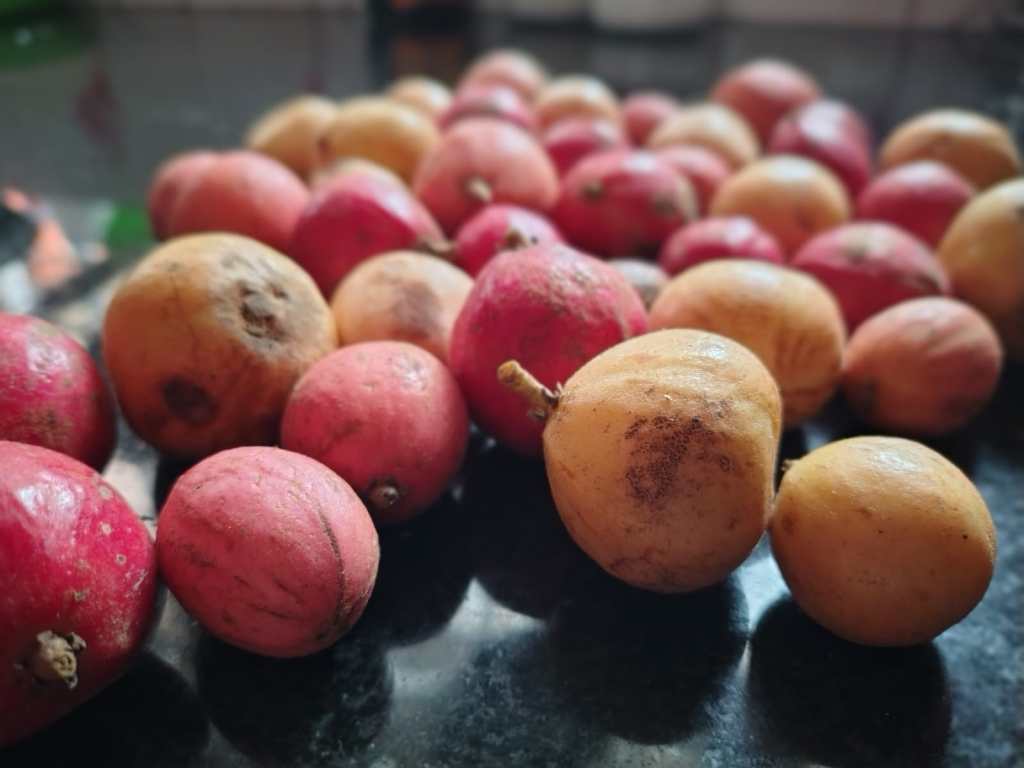
As small as gooseberries, these berries have a softer outer shell and a gel-like inner core. They tasted sweet and sour and were available in three colors – cream, light pink, and dark red. We tasted both the red and white varieties and felt that the reds were more sour than the others. Bhagu bought half a kilo of red ones and half a kilo of white ones, for Rs 100. She was hoping to make pickles with them. But later, I came to know that her entire family found it “too sour.” Still, I thought it was pretty yum, especially if you have a sour palette.
Mayam Kadavu
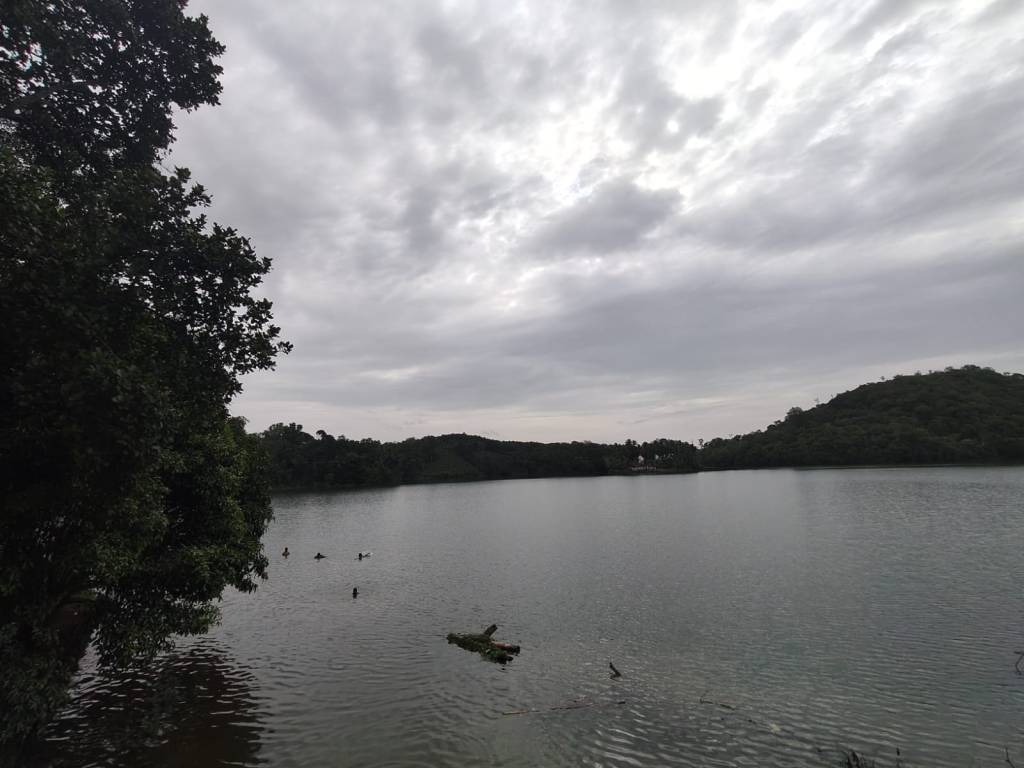
Up next, we were on our way to the most anticipated spot in the itinerary – Mayam Kadavu. In the hopes of bathing and swimming in the water, we had even carried extra clothes.
Unfortunately, on the way, villagers warned us that we won’t be able to swim. Due to the heavy rains in the previous days, the water level had risen, all the way to the area where vehicles are usually parked. Sadly, this water was also polluted.
Still, since we had come all the way, our buddy suggested that we try our luck. Despite the rows of parked vehicles and tourists, our driver was able to find a spot to park the traveller. Unfortunately, the water was as polluted as the villagers had warned us.
Though a part of me was disappointed that I couldn’t play in the water, the other, lazy part was happy to unwind and gorge on some food again. Bhagu and I had chocolate cone icecreams and salted lemon soda from the nearby small shop. While Bhagu was busy collecting fern leaves and wildflowers to make a tiny bouquet, Saji Chetan offered me a pazhampori(banana fritter), which I devoured in no time.
Neyyar Dam
Though none of us travellers griped about the Mayam Kadavu disappointment, it was obvious that our buddy felt guilty about the missed opportunity. Even though it was an unforeseen incident caused by the rain, she took the initiative to arrange alternate spots for us to visit. It was decided that we would quickly see the Neyyar Dam up close and have an early dinner at Lambodaran Thattukada, en route to Thampanoor.
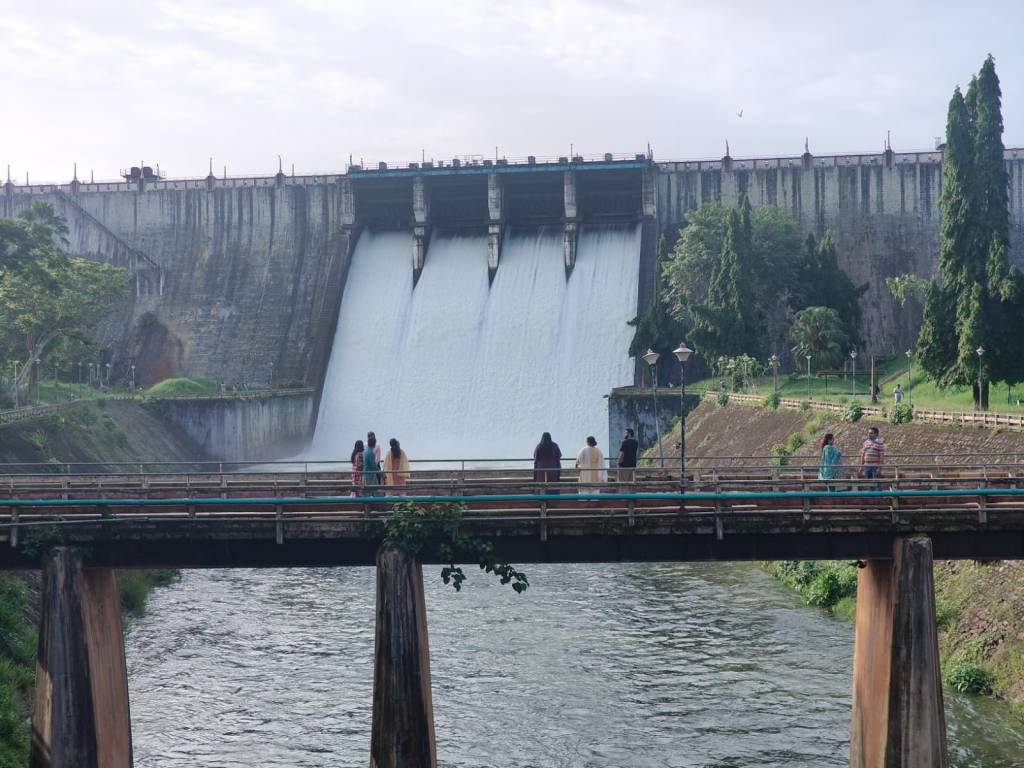
So, we got down at a bridge from which we could see the Neyyar Dam and the foamy water pouring down its four open shutters closely. We noticed an entrance that could get us closer to the dam. However, for that, we had to pay an entry fee. Since we didn’t have the time to explore the dam in detail, we decided to enjoy the view from the bridge.
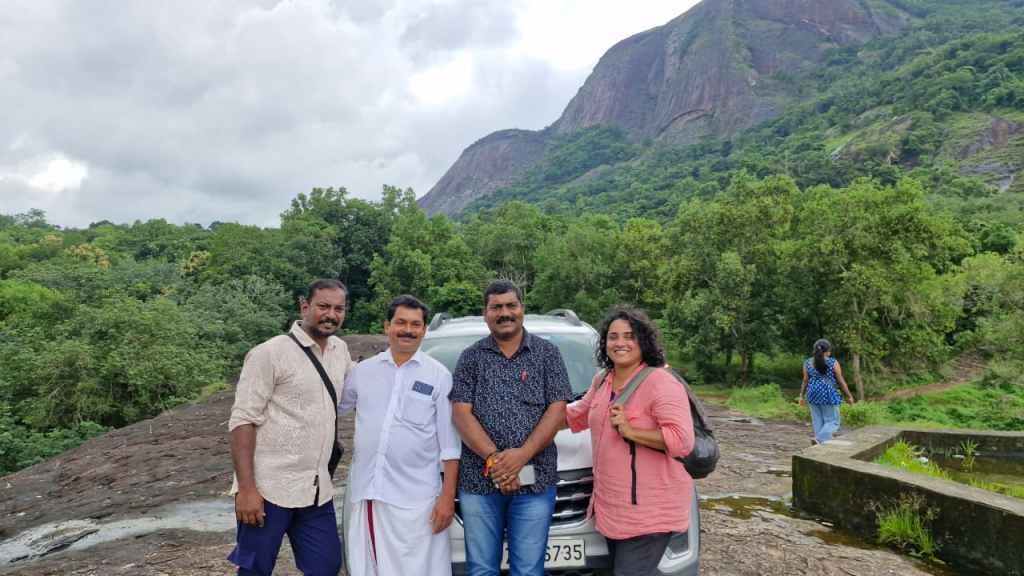
Sumesh Chetan and Saji Chetan bid us farewell at this point, as their houses were nearby. We clicked photos and shook hands with them. We felt grateful that they took the time and effort to share their knowledge of the Western Ghats, especially the hills and water bodies of Amboori, with us.
Sree Lambodaran Thattukada
Since we had covered the last spot and were on the way to have more food, I was super excited. At Hotel Lambodaran’s, we ordered boiled kappa (tapioca), coin parottas, and chicken perattu.
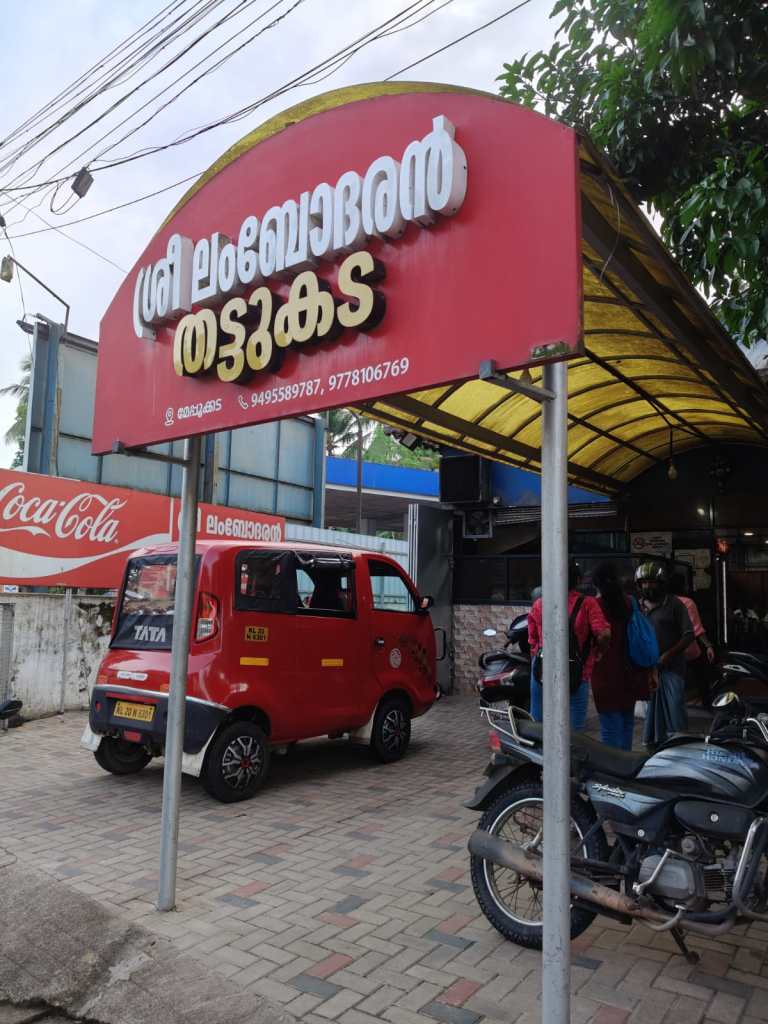
The chicken dish, with its crushed peppers and masalas, was so spicy that I ended up drinking two glasses of hot karinjali water right away. Karinjali water is made by boiling normal water with the dried heartwood/bark of the Cutch tree. Though it sounds like an ayurvedic health drink, it’s a common drink in most Malayalee homes.
Since we were still fanning our tongues after gulping down many glasses of water, we decided to order some cool drinks. The fact that the hotel sold the nostalgic goli soda piqued my interest, and we ordered lime-and-litchi-flavored ones. No wonder the hotel made its non-veg dishes extra spicy. That’s a good business trick to sell more sodas. Anyway, the drinks finally calmed down our spice-kissed lips and tongue.
Back to Thampanoor, and Dispersal
By 7 pm, the traveller reached the entrance of Thampanoor railway station. On the way, a few of us had already gotten off at bus stops close to their homes. The visitor from Ernakulam, who had a train to catch, rushed to the railway station, while the rest of us took our time bidding goodbye to each other. Bhagu and I took an Uber-Auto to her place.
The next day, she drove me back home on the way to her parents’ place. On the way, we listened to songs, discussed family, careers, friendships, and dreams, and made a pit stop in Varkala to meet another school friend.
In between, I couldn’t help but worry about something our buddy Reshma had mentioned. Sajna Chechi, the founder of Appooppanthaadi, had considered closing down her company many times. Why would a flourishing travel group with a 4.9/5 rating on Google ever consider closing down?
I understand it’s difficult to run a business, especially to keep it afloat financially. But considering what a boon this group has been to the average Malayali woman who loves to travel, I sincerely hope Appooppanthaadi will resolve its issues, scale up, and even venture into more countries and premium travel. I hope they never stop being a safe and happy place for women wanderers.
As the red Suzuki S-presso sped through the coastal roads of Varkala, Bhagu broke my reverie and asked, “Jo, will I have to wait another year to read your Amboori blog?”
I couldn’t help but burst into a chuckle. I couldn’t blame her. I had taken close to nine months to catch up and write about the Kathirmudi trek.
“Soon,” I promised her. 😉
Fair disclaimer: This is not a sponsored post. But if you are interested in going on this trip with Appooppanthaadi, you can book a slot here.
Author’s Notes
~ Ownership of all group photos and nature images belongs to the individual hikers or Appooppanthaadi.
~ All other content on this blog is the intellectual property of the author. © 2026 Lirio Marchito. All rights reserved.
~ This blog is part of a series exploring my travels through Trivandrum, the capital city of my home state, Kerala, in India. You can read more posts from this series here. Trivandrum | Kerala| India

 Lirio's Wanderings
2 thoughts on “Amboori – A Monsoon Walk with Appooppanthaadi – Part 2”