
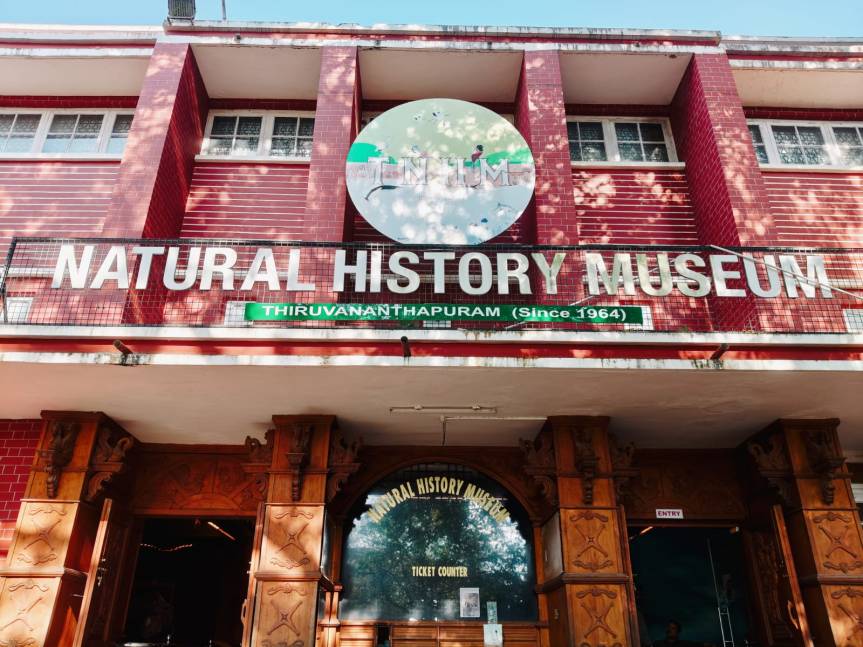
“What’s so special about a Natural History Museum? It’s just a place with a lot of geeky, boring stuff like fossils and dead reptiles in formalin, right?”
“You spend hours inside a museum? Didn’t you get bored? I skimmed through the whole building in 20 minutes.”
These are sample comments I get while ranting about my museum visits. Fair disclaimer. I’m not a nerd, geek, or dork. (No, I’m not being modest; I would have been flattered to be one.) Still, I love solo museum dates.
Usually, when I visit a museum, I mentally role-play as a time-traveller from the past. Someone experiencing the modern world for the first time, and constantly comparing it to the ancient period she inhabited.
But, inside a Natural History Museum, I play a different game. There, I imagine I’m a kid from the famous American movie ‘Night at the Museum.’ A kid who knows that any moment now, these fossils and stuffed dead animals could come alive and wreak havoc. But it could also be a great spectacle and a hell of a lot of fun.
Skeletal Gallery
On September 23rd, 2025, Tuesday, my 13/30th day at Trivandrum, around 4 PM, I walked out of the Sree Chithra Art Gallery and rushed past the Children’s Park and Police First Aid Post to reach the Natural History Museum. I bought an adult entry ticket for Rs 40.
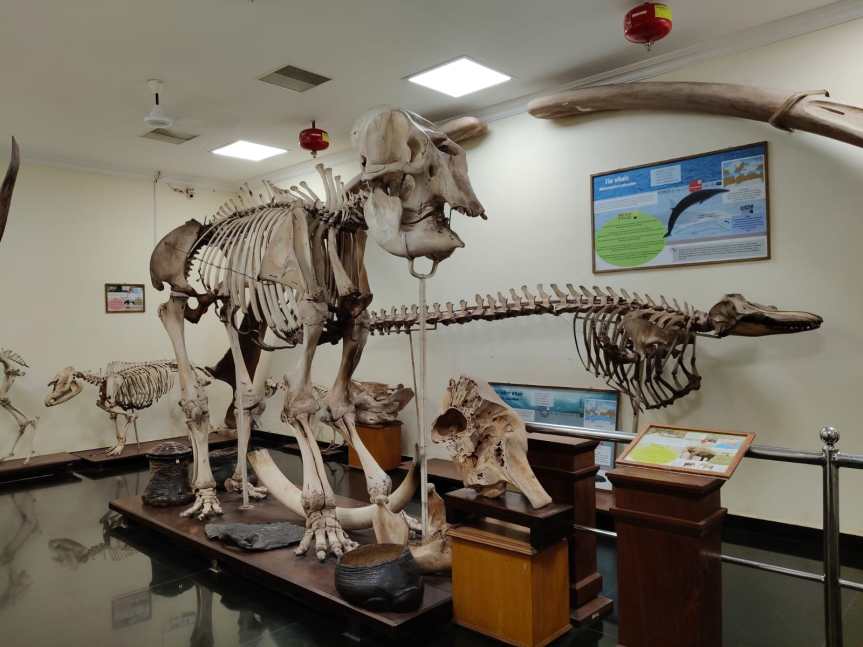
First, I came across the skeletal gallery, where original human and animal skeletons are on display. Part of me wishes I had explored these places as a kid, but the more realistic part knows the truth – the kiddo me would have screamed and cried ugly tears on seeing these skeletons.
As a child, I was scared of death, dead people, ghosts, skeletons, nightmares, and whatnot. I used to run whenever the skeleton popped up in the popular Malayalam mystery-horror film Devadoothan. Needless to say, any horror movie scarier than that, I proudly skipped.
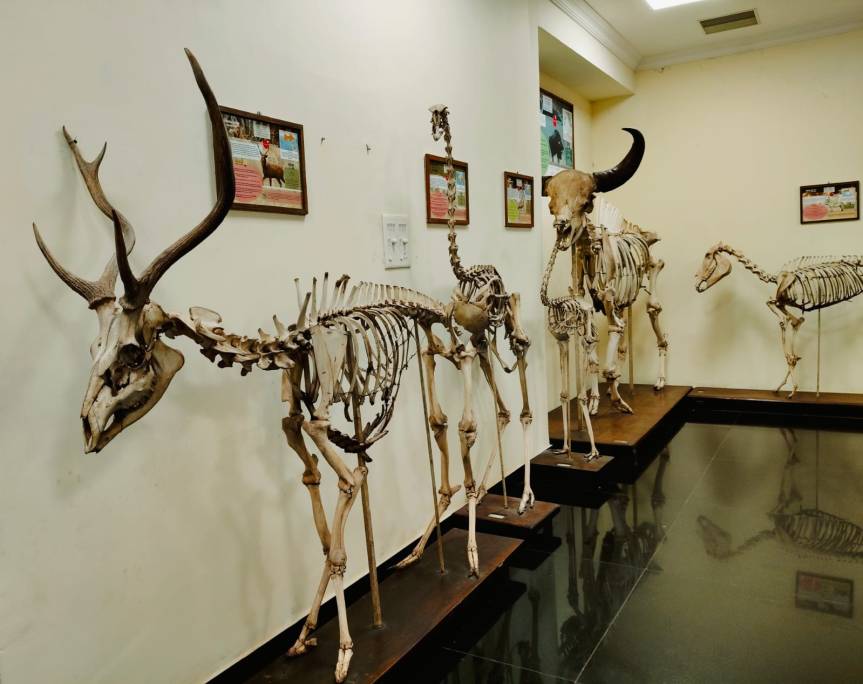
The 30-something me was more tolerant of skeletons. In fact, I was fascinated to see a whale’s lower jawbone because it was as big as the wall. But the human skeletons still made me cower.
The large skeletons of bison and deer made me wonder what killed them. In forensic studies, there are methods to identify traumatic signs in bones and trace them to the cause of death.
Taxidermy
There were hundreds of stuffed dead birds and animals in the museum. They made me wonder: were any of them still alive and thriving in the zoo when I last visited it? How many of the living birds and animals I saw in the zoo that day would soon be displayed on mounts inside this museum? Life truly is fleeting.
The stuffed birds arranged on tree branches looked like art. This preservation technique is known as taxidermy. It’s a multistep process, starting with an incision in the bird’s belly and slowly peeling back its skin over the skull.
The wings and skull are left attached, while the rest of the bones and internal organs are removed. The inside of the skin is treated with chemicals like borax for preservation. Then, a carved wooden or cotton body is constructed, using the bird’s exact anatomical measurements, to reconstruct the body.
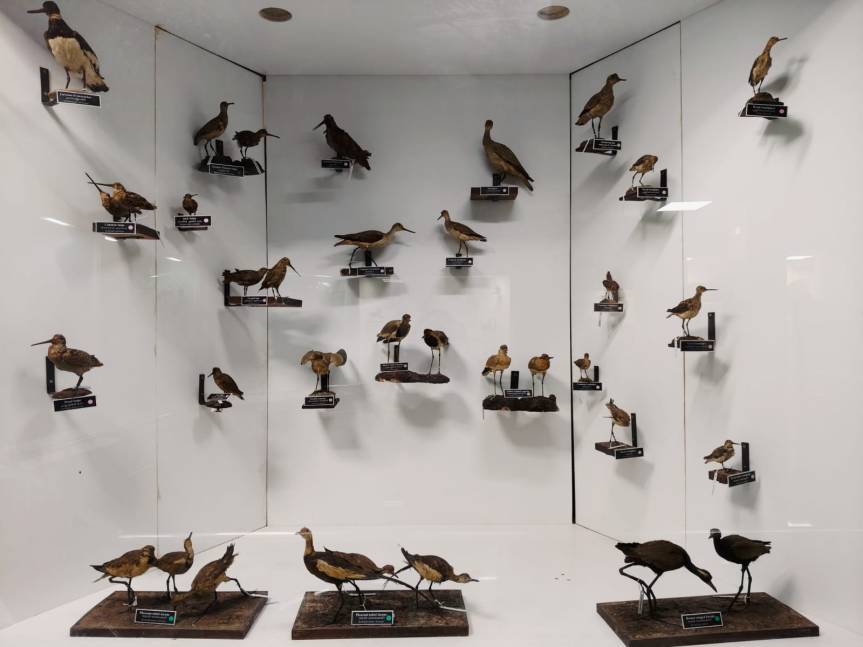
If all those birds came alive at once, it would have been an astounding sight. Not to forget the ruckus, as well.
There were also stuffed leopard, lion, and monkey skins. Landscapes of forests from various continents were constructed as backgrounds for these animals. They were named Asian, African, and American zones. Wherever stuffed animals were unavailable, statues were used. It was funny how a stuffed crane was attached to even a concrete rhinoceros statue, like in real life.
One aspect of this museum that I loved was the motion-sensor lights. Like a spotlight following an artist on stage, they went on and off as I moved from one section to the other.
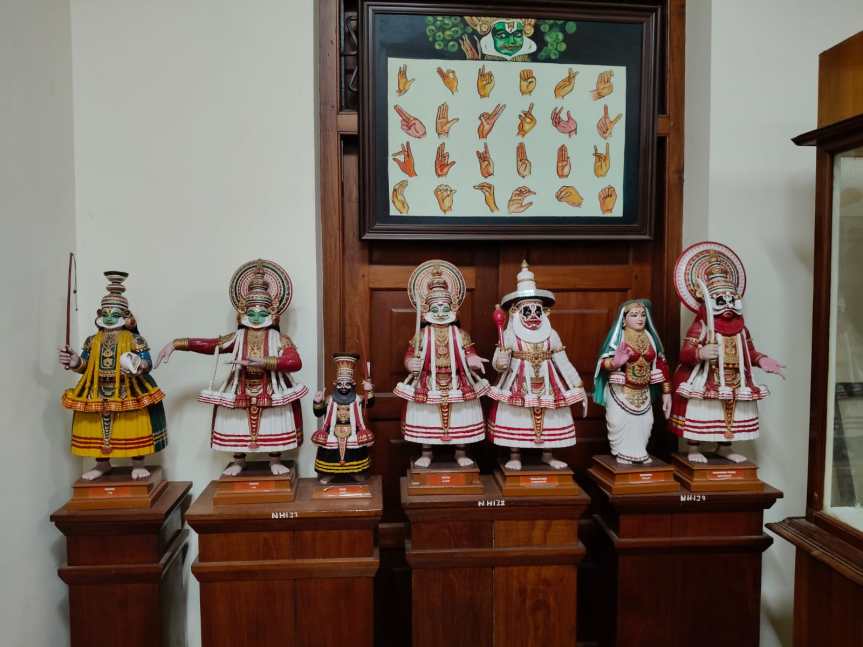
Models of traditional Kerala temples, homes, kathakali forms, and women dressed in traditional attire from different states of India were exhibited at the end of this section.
I realised time was not on my side. The museum would close by 4:45 pm. So I had to rush through the remaining galleries. Still, I tried my best to make the most of the visit.
Index Gallery
Up next, I came across a gallery with models of various fish and rays. There were also exoskeletons of many insects, tortoise shells, and reptile skeletons. Many dead reptiles were also preserved in jars filled with chemicals. The walls of these rooms displayed skulls and tusks of different types of deer. One section that particularly interested me was the preserved varieties of coral reefs.
A K Antony Gallery
A K Antony is one of the seniormost leaders of the Indian National Congress party. He was a former chief minister of Kerala and the defence minister of India from 2006 to 2014.
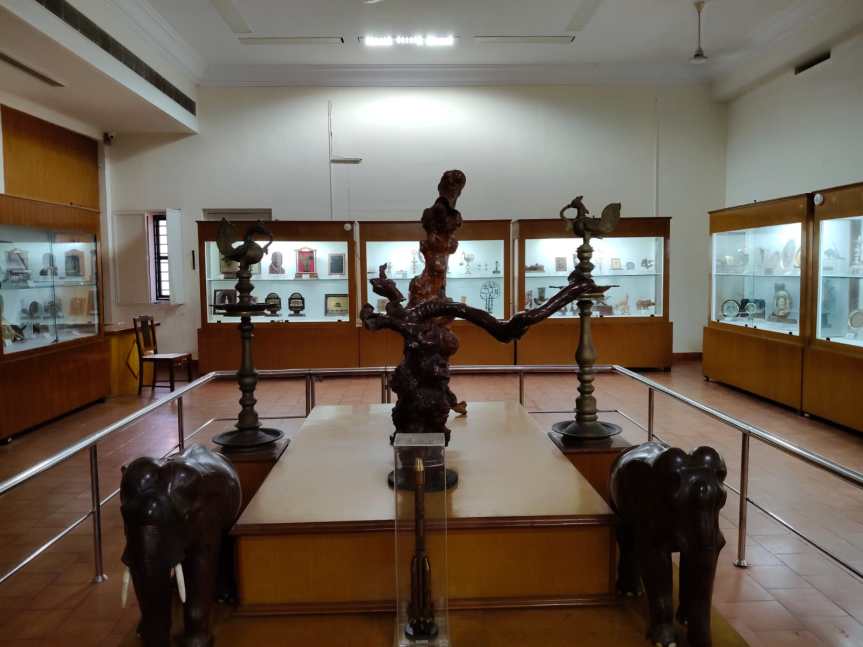
This particular gallery exhibited all the gifts and momentos Shri Antony received from across the globe while he was serving different ministerial positions in India. I felt he was setting a good example for his successors and also for the young aspiring politicians in my state through this gallery.
Geology Gallery
The Geology Gallery exhibited igneous, sedimentary, and metamorphic rocks, and different varieties of timber.
I was also intrigued by the conservation laboratory that was out of bounds for normal visitors like me.
Reflections
Overall, visiting this museum was a highly educational and enlightening experience for me. It made me wonder how different my life, especially my career choice, would have been had I visited this place as a kid.
As someone who made a major career transition in her mid-20s, I highly recommend taking kids to places like this. We never know, they might become future zoologists, botanists, marine biologists, ornithologists, paleontologists, or even taxidermists by drawing inspiration from such a visit.
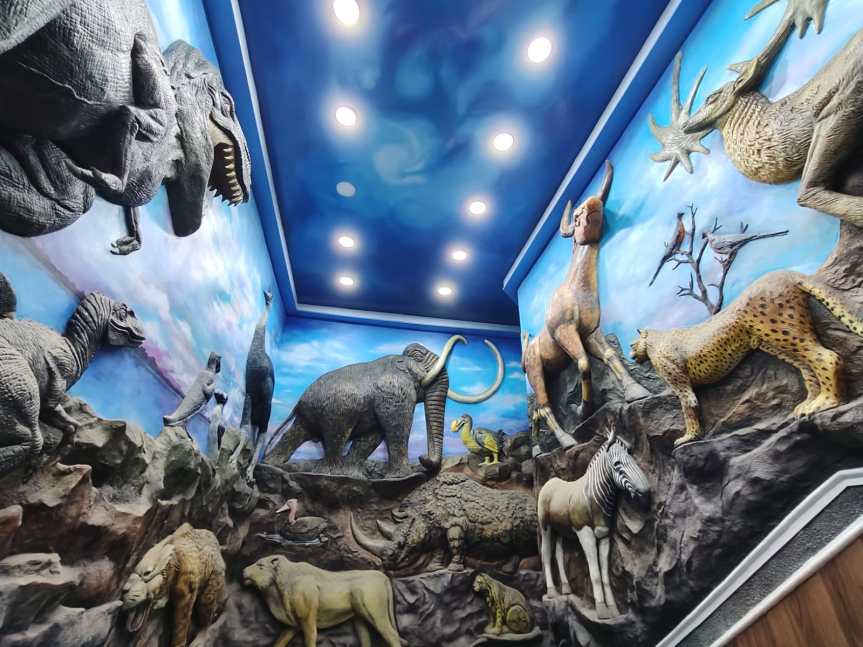
Introducing kids to a wide variety of career options helps them make well-informed decisions. We should also encourage them to choose careers that match their skills and interests, instead of blindly chasing money or market trends.
Since I stepped out of the Natural History Museum by only 5 PM, I missed my regular limited-stop city bus from the Museum Complex’s entrance, so I walked towards the PMG Junction, content and grateful for the eventful day.
But within the crowds, I felt lost. The whole world was rushing home after a busy day at the office, and I struggled to keep up, like a fish swimming against the current.
I had no clue that the day still had one last card to play.
Author’s Notes
~ All content on this blog is the intellectual property of the author. © 2026 Lirio Marchito. All rights reserved.
~ This blog is part of a series exploring my travels through Trivandrum, the capital city of my home state, Kerala, in India. You can read more posts from this series here. Trivandrum | Kerala| India
 Lirio's Wanderings